Compute & Cloud
SpaceX seeks regulatory approval for orbital data centers
SpaceX has requested regulatory permission to build solar-powered orbital data centers, though experts warn that high launch and production costs currently make the economics challenging.
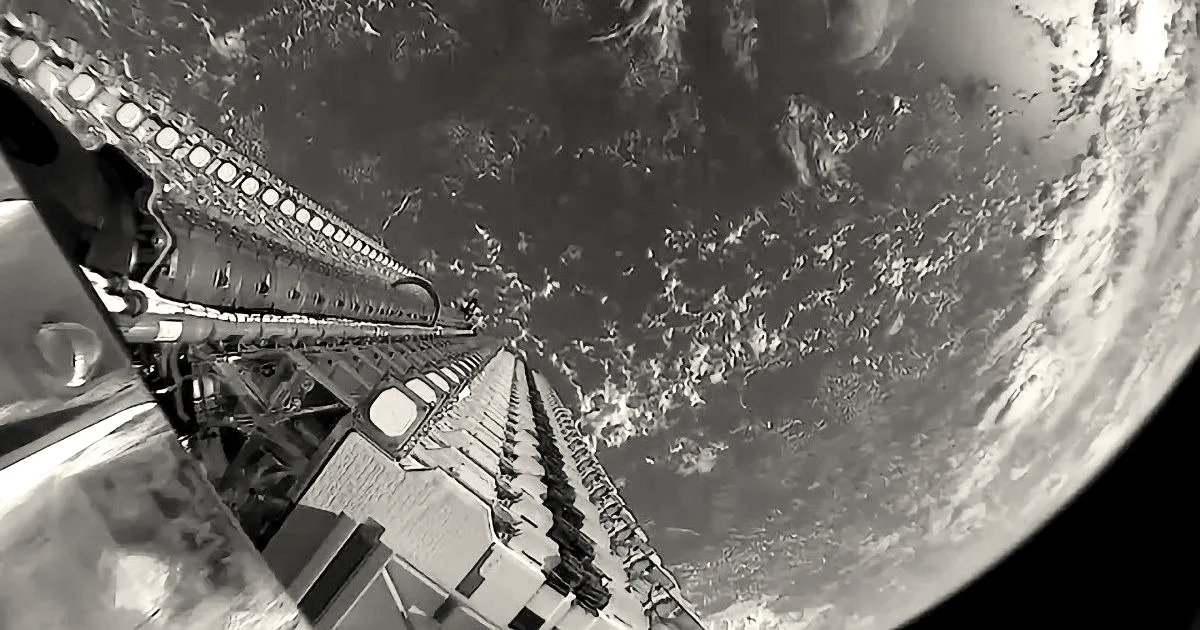
SpaceX has requested regulatory permission to build solar-powered orbital data centers, aiming to shift as much as 100 GW of compute power off the planet. Projections suggest 1% of global compute could be in orbit by 2028, a timeline supported by a reported bet between the head of compute at xAI and his counterpart at Anthropic. Other players are moving quickly: Google has announced its Project Suncatcher space AI effort to launch prototype vehicles in 2027, while Starcloud, a startup with $34 million in funding, has filed plans for an 80,000 satellite constellation.
Despite this ambition, industry experts and competitors point to financial hurdles. According to space engineer Andrew McCalip, a 1 GW orbital data center might cost $42.4 billion—almost 3x its ground-bound equivalent. Today, the Falcon 9 rocket delivers a cost to orbit of roughly $3,600/kg. Making space data centers viable requires prices closer to $200/kg, an 18-fold improvement. While SpaceX hopes its Starship rocket will close this gap, economists at Rational Futures suggest SpaceX will not want to charge much less than its best competitor. If Blue Origin’s New Glenn rocket retails at $70 million, SpaceX’s launch prices could remain high. Furthermore, McCalip noted that satellites themselves cost almost $1,000 a kilo to manufacture right now. Matt Gorman, CEO of Amazon Web Services, noted: “There are not enough rockets to launch a million satellites yet, so we’re pretty far from that. If you think about the cost of getting a payload in space today, it’s massive. It is just not economical.”
Technical challenges in space are significant. In a vacuum, dispersing heat requires massive radiators, a challenge highlighted by Mike Safyan, an executive at Planet Labs, which is building prototype satellites for Google’s Project Suncatcher. Additionally, cosmic radiation can cause “bit flip” errors that corrupt data, requiring expensive shielding or rad-hardened (radiation-hardened) components. Proponents rely on energy arbitrage, as solar panels in space are 5x to 8x more efficient than on Earth and can remain in sight of the sun for 90% of the day or more. However, silicon panels degrade quickly, limiting satellite lifespans to about five years.
The basic input cost of power highlights the current economic divide:
- Terrestrial power: roughly $570 to $3,000 per kW over a year.
- Space-based power: $14,700 per kW over a year.
These economics force a clear distinction between two types of AI workloads: training (developing AI models) and inference (running AI models). Training requires thousands of GPUs working in unison. While hyperscalers (large cloud providers) connect terrestrial networks at hundreds of gigabits per second, current inter-satellite laser links only reach about 100 Gbps. To bypass this, Google’s Project Suncatcher proposed flying 81 satellites in formation. Conversely, inference workloads do not require massive GPU clusters and can run on a single satellite. Philip Johnston, CEO of Starcloud, expects almost all inference workloads will run in orbit. SpaceX’s filing anticipates about 100 kW of compute power per ton, utilizing laser links to share data. Ultimately, as McCalip noted, a FLOP (floating point operation per second) is a FLOP regardless of where it lives, allowing operators to use space as a fallback once terrestrial constraints bind.
Why it matters
The economics of orbital AI data centers currently face significant hurdles, including high launch costs and thermal management challenges, despite interest from major players like SpaceX and Google.