Chips & Hardware
Rivian delays base R2 model to late 2027
Rivian is delaying its base model R2 until late 2027 and shifting its pricing language to 'starting around $45,000' amid broader industry and production challenges.
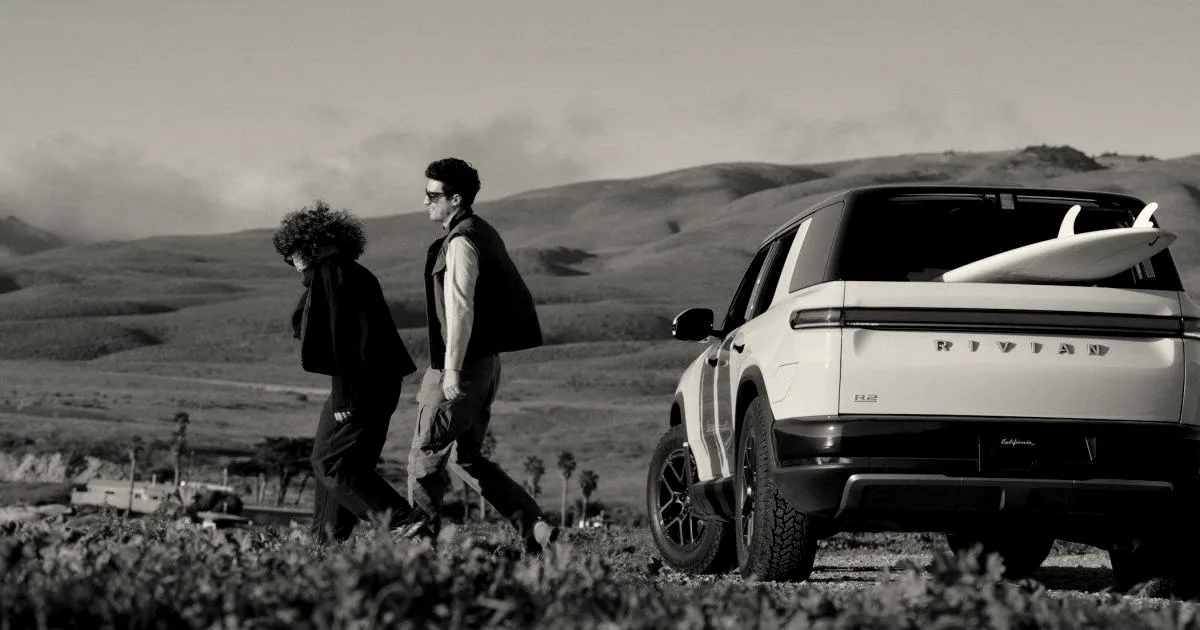
On Thursday, electric vehicle manufacturer Rivian revealed the specifications and pricing details for its R2 SUV, confirming that the release of the base model R2 is delayed until late 2027. The company also adjusted its pricing language. While Rivian first revealed the R2 in March 2024 with a promised “starting at” price, it removed the “starting at $45,000” language from its website in February. The company now states the base model R2 will be priced starting around $45,000.
This shift reflects the company’s evolving strategy as it navigates a changing market landscape in the U.S., including the loss of the $7,500 federal EV tax credit and increased component costs. Legacy automakers have also stopped buying regulatory credits—which are environmental credits sold by EV makers to other automakers—from Rivian.
To contrast the upcoming R2 configurations, Rivian outlined the following timeline and pricing expectations:
- Standard R2 (First half 2027): Priced starting at $48,490, offering a range of up to 345 miles.
- Base Model R2 (Late 2027): Priced starting around $45,000, offering a range of about 275 miles.
Rivian is prioritizing its higher-spec trims first to showcase the platform’s capabilities while scaling production. Despite the delays to the cheaper models, the company is attempting to execute one of the fastest electric vehicle launches in U.S. history. Rivian is projecting sales of between 20,000 and 25,000 R2s by the end of 2026, with plans to build the vehicles at a new factory it is constructing in Georgia. To manage production costs, the automaker has focused on simplifying its vehicle design. “We engineered out complexity by moving to a zonal electrical architecture, reducing the number of electronic control units, and utilizing our in-house drive units,” Rivian stated, referring to a zonal electrical architecture, which is an engineering approach to vehicle electrical systems.
These pricing adjustments follow a period of financial and legal pressure for Rivian, whose R1T and R1S sales declined in 2025. The company also recently agreed to pay $250 million to settle a class action shareholder lawsuit centered around how the company suddenly hiked prices on its R1 vehicles in 2021. Rivian’s pricing challenges draw comparisons to competitor Tesla and its CEO Elon Musk, who faced similar hurdles. Tesla spent years promising a Model 3 priced at $35,000, which was only briefly available, and originally pitched its Cybertruck in 2019 as starting at $40,000 before ultimately launching it at a much higher price point.
Why it matters
Rivian’s pivot on the R2 base model highlights the difficulty of scaling EV production while maintaining aggressive price targets in a volatile market, echoing past struggles by competitors like Tesla.