Chips & Hardware
Uber's autonomous-vehicle empire now spans more than 30 companies
Uber has struck deals with more than 30 autonomous-vehicle companies in two years, building a global robotaxi network after abandoning its own self-driving program in 2020.
Uber tried building autonomous-vehicle (AV) technology in-house first. Under then-CEO Travis Kalanick, the company formed Uber Advanced Technologies Group (ATG) in 2014 and acquired self-driving truck startup Otto in 2016, testing AVs on public streets in California, Pittsburgh, and Arizona. That effort unraveled after Waymo sued Uber over trade secrets, Kalanick resigned in 2017, and a self-driving Uber Volvo XC90 struck and killed a pedestrian in Tempe, Arizona, in 2018 while a human safety operator wasn’t paying attention. In 2020, under CEO Dara Khosrowshahi, Uber sold ATG to Aurora, Jump to Lime, and Elevate to Joby Aviation, keeping equity stakes in each, and refocused on human-driven ride-hailing and delivery.
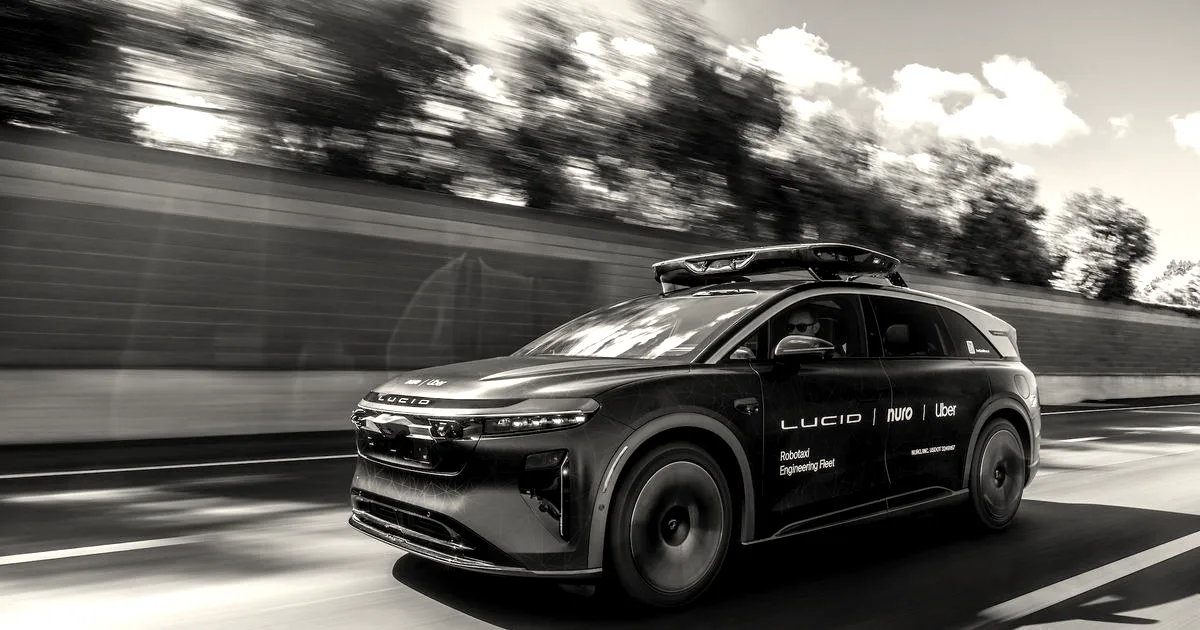
Uber crept back into AVs in 2022, and deal flow picked up in earnest in 2024. It now holds partnerships and, in some cases, direct investments across more than 30 companies with a global approach. Financial commitments vary widely: Uber put $300 million into Lucid and agreed to buy at least 20,000 Lucid Gravity SUVs over six years, later adding a $200 million follow-on investment and raising its minimum order to 35,000 vehicles, giving Uber more than 11% of Lucid. It made an initial $300 million investment in Rivian under a deal that could be worth up to $1.25 billion, and is expected to purchase 10,000 R2 robotaxis. Uber’s total commitment to self-driving startup Nuro, including its 2025 Series E participation, is about $500 million, according to people familiar with the terms. Uber also still owns a 19.7% Class A equity stake in Aurora, as of April, the company it sold ATG to in 2020.
Not every partnership has held: Uber and GM’s Cruise struck a robotaxi deal in August 2024, but GM shut down Cruise’s robotaxi business entirely in December 2024. Uber’s relationship with Waymo has also contracted — the companies ended their Phoenix partnership in July, and Waymo is now trying to exit its contract with Uber, which doesn’t run out until May 2028. Meanwhile WeRide, live in Abu Dhabi and Dubai, is expanding to 15 more cities by 2030, and Avride’s robotaxis are now under a National Highway Traffic Safety Administration investigation opened in May 2026 after more than a dozen crashes and one minor injury.
Why it matters
Uber has effectively outsourced the capital-intensive, high-risk work of building self-driving technology to dozens of partners while keeping the ride-hailing network and equity stakes that let it capture the upside without repeating its 2018 crash-driven retreat.