Startups & Funding
Quartermaster raises $43 million to build a maritime sensor network
Quartermaster raised $43 million in a Series A round to scale its SmartMast sensor network, which aims to provide more reliable maritime intelligence than the current AIS standard.
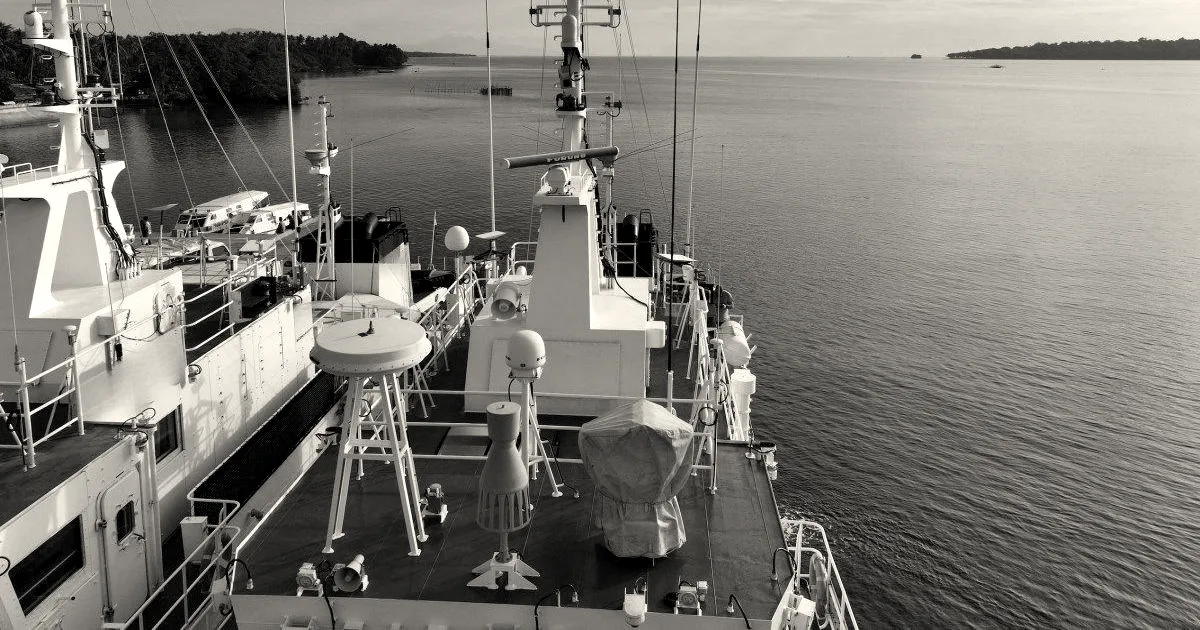
Quartermaster, an Arlington, Virginia-based startup, announced on Wednesday that it has raised $43 million in a Series A funding round. The early-stage venture capital funding round was co-led by First Round Capital and Quiet Capital. The startup plans to use the capital to scale its SmartMast technology, which functions as a distributed sensing network for ships. The company describes this network internally as a “hive mind” for vessels navigating the oceans.
The startup is positioning its technology as a necessary alternative to the Automatic Identification System (AIS), the current maritime standard for tracking vessels. According to Quartermaster CEO and founder Neil Sobin, AIS is a “completely broken system” that is “vulnerable” and “fragile.” Sobin noted that because the current system relies on self-reported data, operators can easily “opt out of the system, or spoof it” to facilitate illicit activities on the high seas. “In maritime, AIS is a completely broken system. It’s opt-in, [you] enter your own data, and if you want to do anything nefarious on the ocean, from petty smuggling all the way up to sanctions evasion, you can simply opt out of the system, or spoof it,” Sobin said.
To address these vulnerabilities, Quartermaster is deploying its SmartMast hardware directly onto vessels. The company reports that more than 600 ships currently using SmartMast have covered 10 million square miles of ocean to date. Beyond tracking and intelligence gathering, the technology has also had a direct impact on safety; SmartMast-equipped ships have assisted in over 20 rescues of mariners at sea. Sobin indicated that while search-and-rescue assistance does not drive revenue, it helps the company build trust and align incentives with maritime operators.
The challenge of deploying physical sensors across vast maritime environments has historically limited the adoption of ocean intelligence technologies. Bill Trenchard, a partner at First Round Capital who previously led Uber’s seed round in 2010 and invested in Flexport, highlighted Quartermaster’s approach to this problem. Trenchard noted that most attempts to bring intelligence to the ocean have run into the same wall because the cost of bespoke hardware does not scale to a planet that is mostly water, but Quartermaster has solved that challenge.
Why it matters
Quartermaster is attempting to build a continuous, distributed sensing network to provide maritime intelligence, addressing the limitations of the current AIS system which the company claims is vulnerable to fraud and evasion.