Startups & Funding
Thea Energy wins $20M federal grant for fusion magnets
Thea Energy has received a $20 million ARPA-E grant to help manufacture its modular high-temperature superconducting magnets for stellarator fusion reactors.
Thea Energy, a fusion power startup, told TechCrunch Monday that it has received a $20 million award from ARPA-E — the U.S. Department of Energy’s advanced-research funding arm — to help manufacture its modular high-temperature superconducting (HTS) magnets. For hard-tech startups, manufacturing is a costly endeavor, and the grant gives Thea a financial boost toward building at scale.
HTS magnets are costly but important components in any magnetic confinement reactor, one of the two main approaches startups are using to try to harness fusion power for commercial purposes. In these reactors, powerful magnetic fields contain and compress plasma, heating its particles until the fuel can fuse and release large amounts of energy.
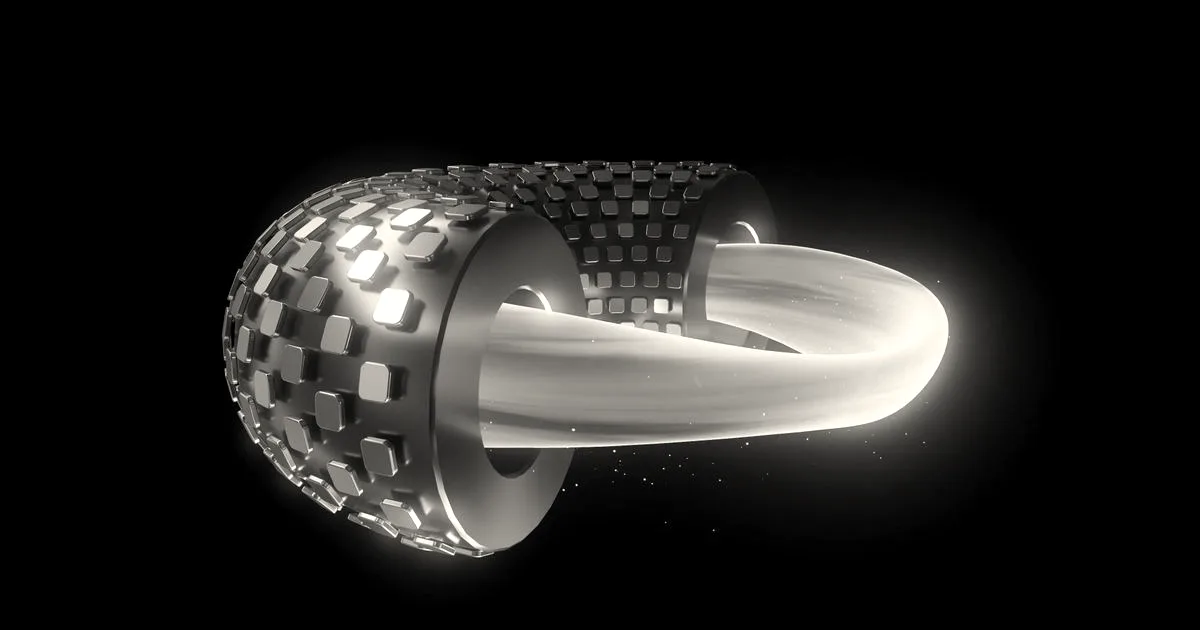
Thea’s reactor is based on a design known as a stellarator — a shape that resembles inner tubes twisted and squeezed in ways that help confine plasma more effectively. Most stellarators use magnets built to mimic those twists and turns, which makes them expensive to manufacture.
To cut manufacturing costs, Thea uses fewer magnet variants. The 12 large magnets that do the heavy lifting are made from four different templates, while the more than 300 smaller magnets used to fine-tune the plasma are all identical, arrayed around the reactor’s periphery similar to how pixels are distributed across a computer display. Those smaller magnets are controlled by software, an arrangement Thea says should allow more forgiving construction tolerances — which could lower costs.
Thea is among the top-funded fusion power startups, having raised $100 million in May on top of a $20 million Series A in 2024. Like many of its peers, the company plans to build a commercial-scale fusion power plant in the mid-2040s.
Why it matters
Thea’s grant signals growing federal appetite for derisking fusion manufacturing bottlenecks, not just reactor science — a distinction that could determine which of the well-funded fusion startups actually reach commercial deployment on the mid-2040s timeline they’re targeting.