Chips & Hardware
Project Mirage launches Dune, a context-aware Mac keypad
Project Mirage has launched Dune, a $119 context-aware aluminum keypad for Mac that uses AI to automate workflows and simplify shortcut management.
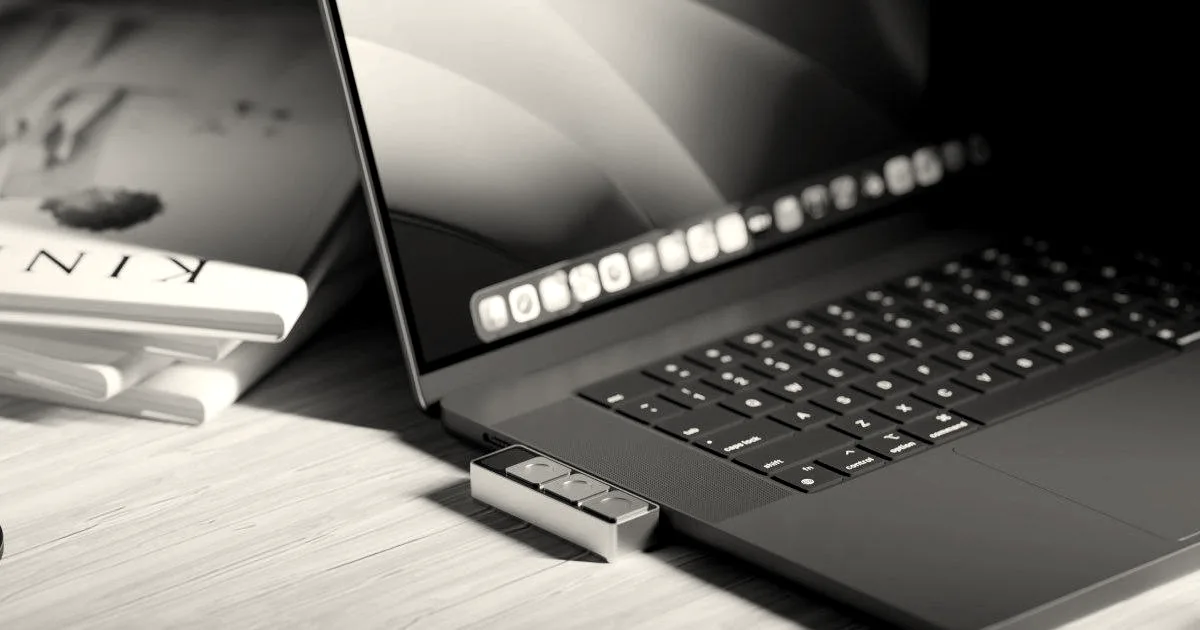
Hardware startup Project Mirage has launched Dune, a physical, context-aware keypad designed to simplify Mac workflows. The device is a tiny, three-key aluminum keypad that plugs directly into a MacBook’s USB-C port. Rather than relying on static inputs, the three-button device changes its context automatically based on the specific application currently being used by the operator. For example, the keys can toggle microphones and video during virtual meetings, execute copy and paste commands in spreadsheets, or allow software developers to merge and close pull requests in development applications.
To ensure a seamless physical integration, Project Mirage builds each unit to match the specific Mac model of the user, allowing the hardware to sit flush against the laptop with no gap underneath. If a user’s ports are already in use, the device can connect through a dongle instead. Because Dune has no internal battery, it requires no separate charger and draws its power directly from the MacBook. Dune is currently available at an introductory price of $119, and it is scheduled to retail for $149 after this introductory period expires.
The device requires specific hardware and software configurations to operate. Compatible systems include:
- MacBook models featuring the M2 Air or later
- MacBook models featuring the M1 Pro or later
- Operating systems running macOS 15 Sequoia or later
On the software side, Dune ships with a companion app that allows users to configure shortcuts either for specific applications or system-wide. For deeper customization, users can write their own Python scripts or utilize Dune’s integration with Claude Desktop, which is an AI-powered software tool. Through this integration, users can describe a desired shortcut in plain language, and the AI tool automatically writes the script and assigns it to a key. The companion app also features a marketplace where users can share and download shortcuts created by other owners. If this marketplace gains traction, it could become core to Dune’s growth and retention strategy. The device enters a market alongside competitors like MuteMe, which only controls mute functions, and Stream Deck, which offers business-focused macros—defined as a sequence of automated commands—though Project Mirage aims to offer easier customization across both hardware and software.
Why it matters
Dune represents a shift toward physical, AI-integrated hardware interfaces that aim to reduce the friction of complex software workflows, offering a more customizable alternative to traditional macro pads.