Markets & Business
Rivian stock jumps 27% on VW partnership and 2026 outlook
Rivian’s software joint venture with Volkswagen Group is stabilizing its finances as the company expects to deliver between 62,000 and 67,000 vehicles in 2026.
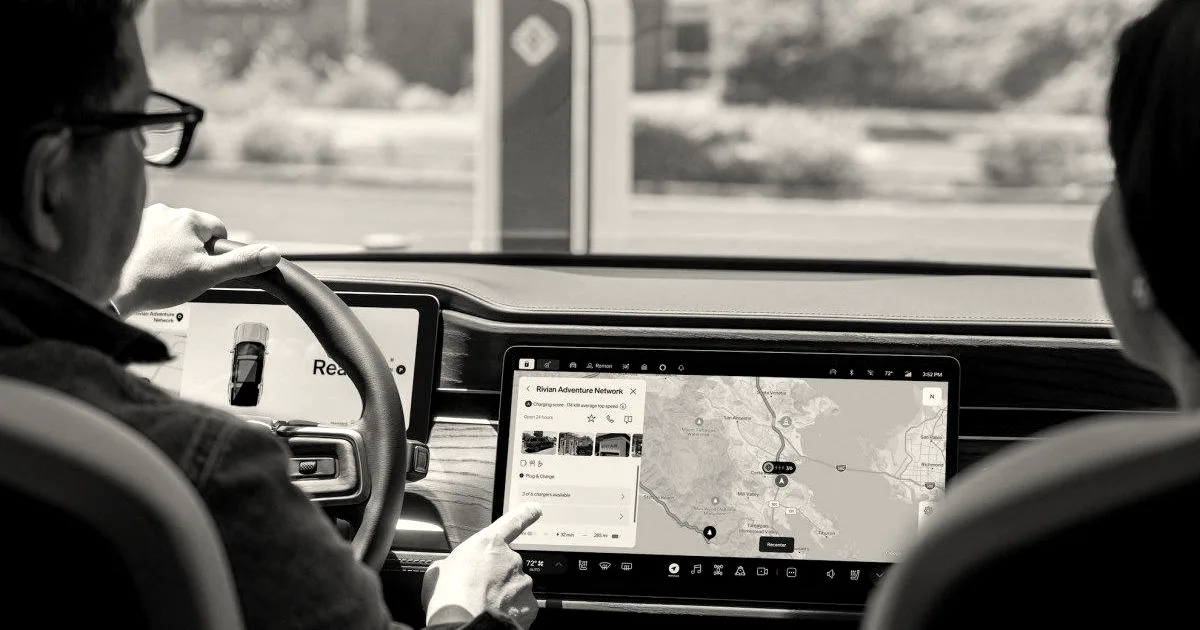
According to analysis by Kirsten Korosec, software and a technology joint venture with Volkswagen Group served as Rivian’s financial savior in 2025. The electric-vehicle maker is expected to receive another $2 billion from VW Group to buoy its operations into 2026. Buoyed by this partnership, Rivian expects to deliver between 62,000 and 67,000 vehicles in 2026, representing up to a 59% bump over the 42,247 vehicles it delivered in 2025. Following the earnings report, Rivian stock increased 27%.
A key focus for the company is reducing its automotive cost of goods sold (COGS) per unit delivered, which fell to $100,900 in 2025 from $110,400 in 2024. This progress comes as Rivian prepares for the production of its lower-cost R2 SUV, which is expected to begin in June. The R2 is estimated to have a base price of around $45,000 and $50,000.
Beyond Rivian, the broader mobility sector is seeing a divergence in autonomous vehicle (AV) strategies. Korosec notes that Lyft is trailing behind Uber in locking up AV partnerships. Lyft holds about $1.8 billion in cash, cash equivalents, and restricted cash, but recently announced a $1 billion share repurchase program—representing about 15% of its market cap—rather than investing directly in the AV value chain.
At the same time, interest in “physical AI”—AI systems integrated into physical hardware—has reignited investment in sensor technologies, driving consolidation among suppliers of lidar (light detection and ranging) and other perception systems. Ouster acquired Stereolabs for $35 million in cash and 1.8 million shares, while MicroVision purchased the assets of the “buzzy-but-now-bankrupt” Luminar for $33 million.
In regulatory developments, the Trump administration officially repealed the US Environmental Protection Agency’s 2009 “endangerment finding,” which had designated greenhouse gases as a “threat to human health and welfare.”
Other notable mobility developments include:
- Ever: The electric-vehicle marketplace secured $31 million in Series A funding.
- Natilus: The startup developing blended-wing aircraft raised $28 million in Series A funding.
- Aurora: The self-driving truck company reported that its vehicles can now travel nonstop on a 1,000-mile route.
- WeRide and Uber: The companies plan to deploy at least 1,200 robotaxis—autonomous vehicles used for ride-hailing—across the Middle East through 2027, including a service launch in downtown Abu Dhabi. Separately, Baidu and Uber plan to launch robotaxis in Dubai.
- Waymo: The autonomous vehicle company pulled human safety drivers from its test vehicles in Nashville, launched a door-closing pilot program with gig workers in Atlanta, and began fully autonomous operations for employees in San Francisco and Los Angeles.
Why it matters
Rivian’s software joint venture with Volkswagen Group is a critical financial stabilizer as it prepares to launch its lower-cost R2 SUV, while the broader industry sees consolidation among perception sensor suppliers and diverging AV strategies between Uber and Lyft.