Markets & Business
SpaceX aborts second Starship V3 launch as engines fail to start
SpaceX aborted its second Starship V3 launch attempt moments after ignition on Thursday, after some engines failed to start, and won't try again until next week.
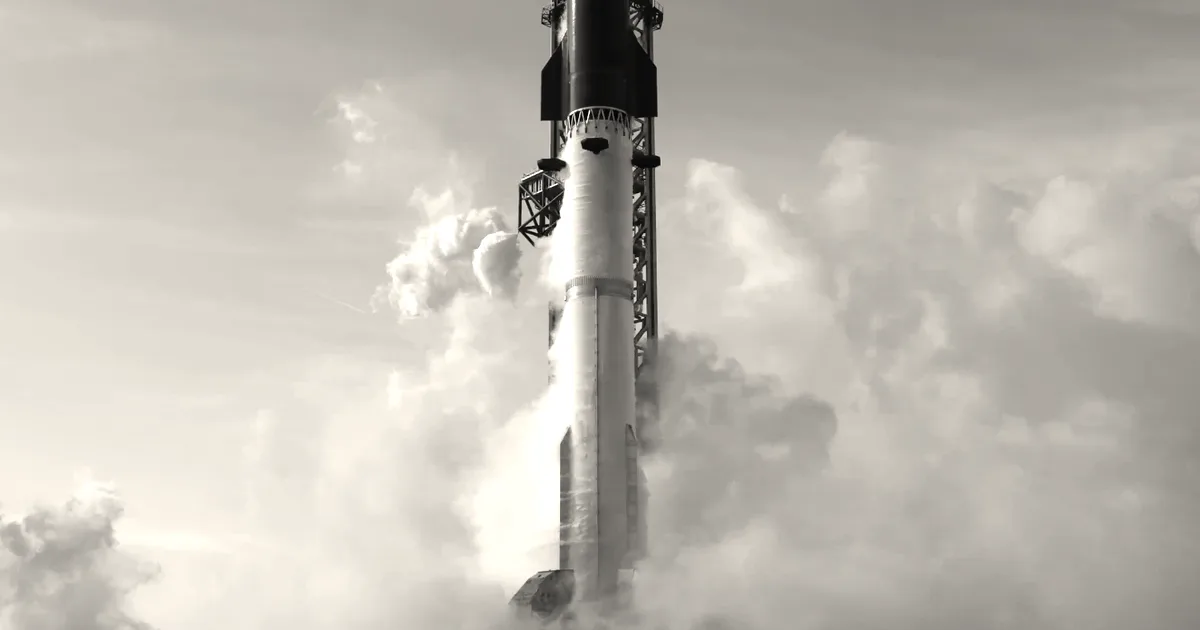
SpaceX abruptly aborted the second attempted launch of its upgraded Starship rocket system on Thursday, just moments after the booster ignited at the company’s complex in South Texas. Thursday’s countdown had only a brief hold at T-minus one minute before clearing; as it expired, the launchpad’s water deluge system fired and the booster’s engines briefly lit before the whole sequence suddenly shut down. Graphics on SpaceX’s broadcast appeared to show that four of the company’s new Raptor engines did not fire upon ignition. CEO Elon Musk said on X that “[s]ome of the engines didn’t start, triggering an automatic launch abort,” and that the company will replace two of them; SpaceX won’t try to launch Starship again until next week, he wrote. SpaceX must now remove all propellant from both the Super Heavy booster and the upper stage before it can determine exactly what went wrong.
SpaceX had been hoping to launch its first third-generation Starlink satellites, which are supposed to burn up around 20 minutes after deployment — Starship has not yet demonstrated the ability to reach Earth orbit. The upgraded Starship and Starlink are central to SpaceX’s plans to prove that “orbital data centers” are both technologically and economically viable; Starlink is also the largest revenue generator and the only profitable part of SpaceX’s business.
Thursday was SpaceX’s first Starship test since it went public on June 12 in the largest IPO in history, raising more than $85 billion and briefly touching the valuations of Amazon and Microsoft — though the stock has steadily fallen over the month since. SpaceX’s stock closed Thursday below its $135 IPO price and sank more than 4% in after-hours trading following the aborted launch.
The company had been trying to return to flight just a few weeks after the first-ever Starship V3 launch in May, which was a mixed bag: SpaceX got the rocket off the launchpad and deployed a number of Starlink simulators, but the Super Heavy booster failed before it could attempt a simulated landing in the Gulf of Mexico, and the upper stage lost an engine en route to deployment — though the upper stage still completed its own simulated water landing without incident. That booster failure triggered an FAA-ordered review; the agency cleared SpaceX to fly Starship again earlier this week after identifying the causes and fixes.
Why it matters
This is SpaceX’s first Starship test since its record $85 billion IPO, and investors are watching closely: the stock fell more than 4% after the aborted launch and already trades below its IPO price, underscoring how tightly Starship’s technical progress is now tied to the company’s public valuation.