Compute & Cloud
Sophia Space raises $10M to build passive cooling for space computers
Sophia Space raised $10 million to demonstrate a passive cooling approach for space-based computers, aiming for an orbital mission by late 2027 or early 2028.
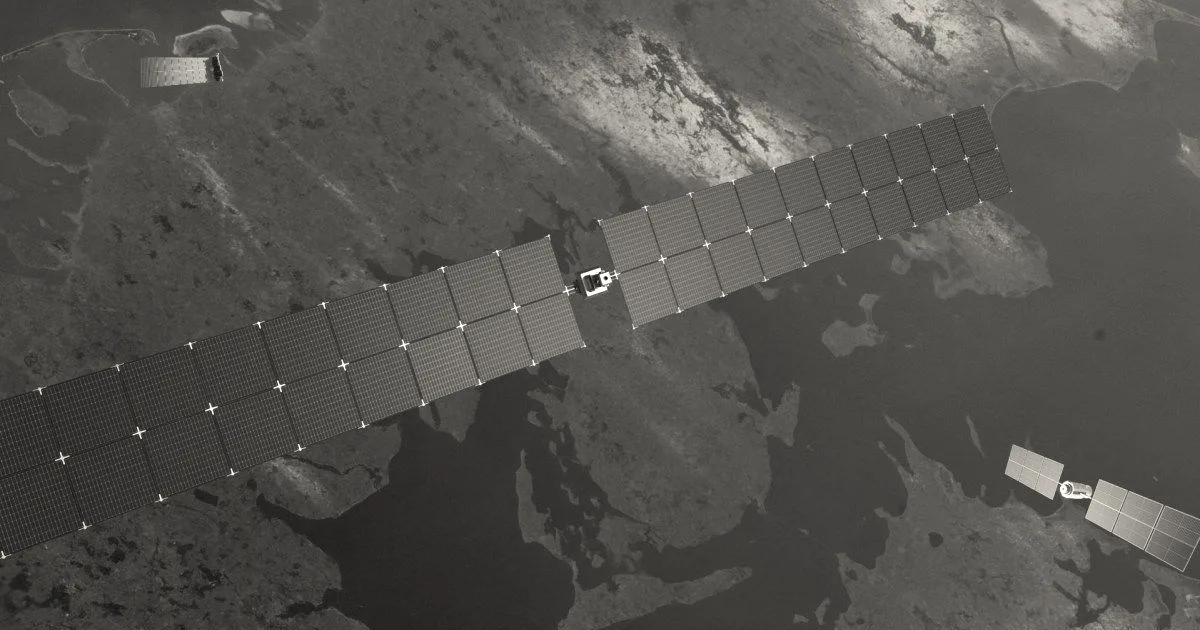
Sophia Space has raised $10 million in seed funding to address the thermal management challenges of space-based computing. The company plans to demonstrate a passive cooling approach for space computers in orbit, aiming to launch a demonstration mission by late 2027 or early 2028. The seed round included participation from investors Alpha Funds, KDDI Green Partners Fund, and Unlock Venture Partners. To execute the demonstration, Sophia Space plans to buy a satellite bus—the structural and power-providing platform of a satellite—from Apex Space.
The startup’s technology originates from a $100-million-endowed program at Caltech that was designed to develop orbital solar plants. Sophia Space co-founder and CTO Leon Alkalai, who is a fellow at the Caltech-managed Jet Propulsion Laboratory, recognized the potential of using this design to power processors in space. The company is adapting this research to build “TILES”—modular server racks with integrated solar panels—which measure 1 meter by 1 meter. By using this thin form factor, the company expects to achieve a 92% power efficiency for processing, as processors can sit directly against a passive heat spreader to eliminate the need for active cooling systems.
Managing heat in orbit remains a significant hurdle for the industry. Nvidia CEO Jensen Huang recently noted, “It’s cold in space … [but] there’s no airflow, and so the only way to dissipate is through conduction”. While competitors like SpaceX, Google, and Starcloud examine traditional satellite form factors that rely on large radiators, Sophia Space is targeting the onboard processing bottleneck. According to Sophia Space CEO Rob DeMillo, current satellite sensors collect vast amounts of data but throw most of it out because they cannot perform the necessary computing on board or transmit it back and forth to Earth fast enough. To address this, Sophia Space plans to begin by offering its TILEs to satellite operators requiring orbital computing solutions.
Looking ahead to the 2030s, Sophia Space hopes to build larger space data centers by scaling this architecture. The company envisions constructing a 50-meter-by-50-meter structure capable of delivering 1 MW of computing power. DeMillo argues that building space data centers with less efficient systems will not be economical, asserting that a single large structure is more viable than a distributed network linked by lasers.
Why it matters
Sophia Space is attempting to solve the thermal management problem for space-based data centers by using a passive cooling design derived from Caltech solar research, which could enable more efficient on-orbit computing.