Startups & Funding
Wayve raises $1.2 billion to scale its self-driving technology
Wayve raised $1.2 billion, which could reach $1.5 billion, at an $8.6 billion valuation to advance its end-to-end deep learning approach for autonomous driving.
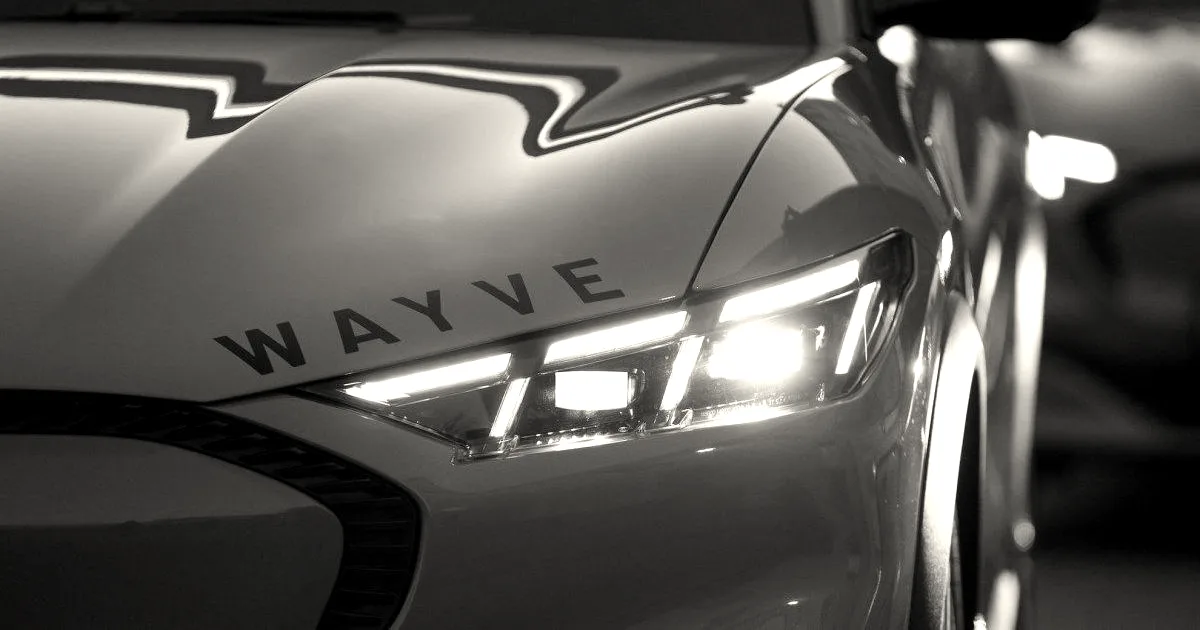
U.K.-based self-driving technology startup Wayve has secured $1.2 billion in its latest funding round, valuing the company at $8.6 billion. The total raise could reach $1.5 billion, driven by an additional $300 million from Uber that is contingent on deploying robotaxis, beginning in London.
The funding round attracted a diverse group of financial and strategic backers. Key investors in the round include:
- Lead Investors: Eclipse, Balderton, and SoftBank Vision Fund 2.
- Automakers: Nissan, Mercedes-Benz, and Stellantis.
- Technology Partners & Returning Backers: Nvidia, Uber, and Microsoft.
- Institutional Investors: Ontario Teachers’ Pension Plan, Baillie Gifford, British Business Bank, Icehouse Ventures, and Schroders Capital.
Launched in 2017, Wayve has developed a software layer using an end-to-end neural network—an end-to-end deep learning approach where the system learns to drive directly from data rather than relying on high-definition maps or specific sensor configurations. This technology is designed to run on whatever chip its Original Equipment Manufacturer (OEM) partners already have in their vehicles. Founder and CEO Alex Kendall described this strategy as “contrarian” in both its technology and business model. Instead of building its own vehicles or operating its own fleet, Wayve is selling its “embodied AI” software to automakers and fleet operators.
“We took a very contrarian view on the technology side. We were the first to build end-to-end deep learning for autonomous driving, and we pioneered this approach. Now, when it comes to this phase of moving into commercialization, we’re also taking a contrarian business model approach,” Kendall said.
Wayve is now transitioning into commercialization through partnerships with Nissan and Uber, with plans to deploy together in more than 10 markets around the world. Nissan plans to use Wayve’s self-driving software in its cars starting in 2027. Meanwhile, Uber plans to launch commercial trials in vehicles equipped with Wayve’s software later this year. Uber CEO Dara Khosrowshahi noted that the partnership plans to deploy in more than 10 markets around the world, praising Wayve’s end-to-end approach for its scale, safety, and effectiveness. Additionally, Nvidia, which participated in Wayve’s $1.05 billion Series C round, was previously evaluating a $500 million strategic investment in Wayve’s next raise, though Kendall did not disclose the exact amount of Nvidia’s participation in this round.
Why it matters
The funding round illustrates the intense competition among Big Tech and legacy automakers to capture value in the automated driving industry through strategic partnerships.