Markets & Business
Rivian cuts DOE loan to $4.5B, targets 300,000-vehicle capacity
Rivian expects to borrow $4.5 billion from the US Department of Energy for its Georgia factory, while increasing initial production capacity to 300,000 vehicles.
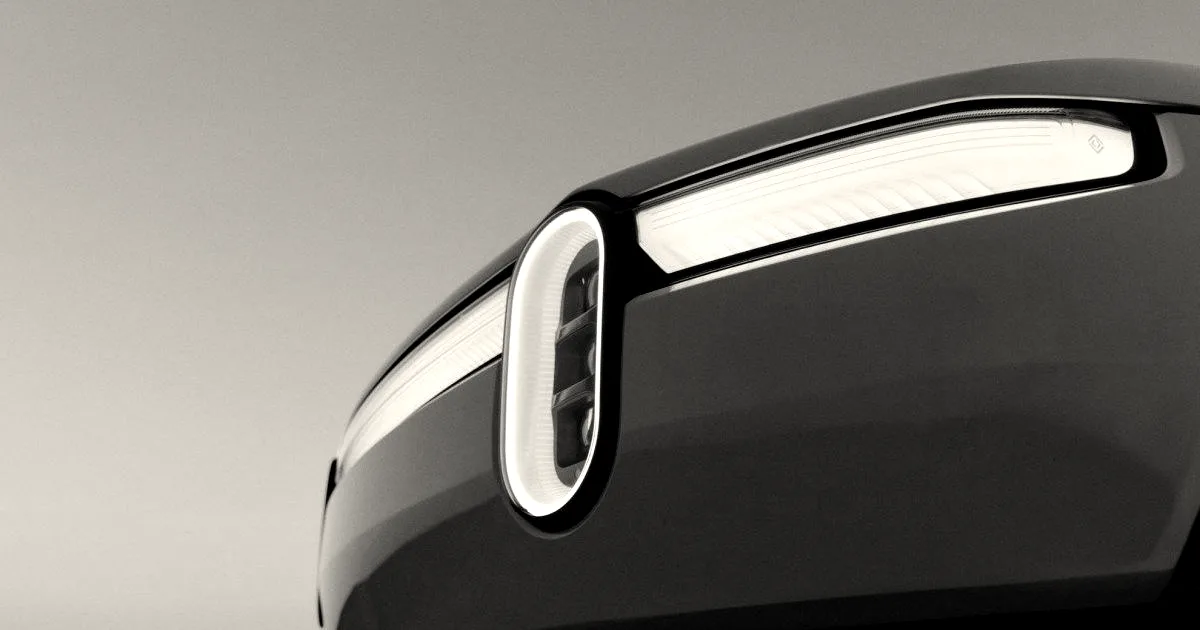
Electric vehicle manufacturer Rivian has reworked its loan agreement with the US Department of Energy (DOE). The automaker now expects to borrow $4.5 billion to build its new factory in Georgia, down from the original $6.6 billion allocation. Rivian announced it will draw on the loan sooner than planned, in early 2027, and expects to increase the initial phase capacity of the Georgia plant by 50%—from 200,000 to 300,000 vehicles. According to CFO Claire McDonough, “The strategic decision that we took was to increase the initial phase of production capacity to the 300,000 units.” McDonough added that this initial capacity will sit on the site’s upper pad, leaving the lower pad as “entirely untouched green field for future expansion.”
According to McDonough, the funding will allow Rivian to scale to 515,000 units of overall capacity, which includes its factory in Normal, Illinois, which has a capacity of 215,000 vehicles. This overall target is 100,000 vehicles lower than Rivian’s previously stated combined capacity, which had factored in a 400,000-vehicle total capacity for the Georgia site. Rivian expects to start making vehicles at the Georgia factory, located outside Atlanta, by the end of 2028.
A portion of the Georgia plant’s capacity will be used to produce R2 robotaxis (autonomous vehicles for ride-hailing) for Uber. Under the agreement, Uber is making an initial $300 million investment in Rivian and is expected to purchase 10,000 fully autonomous R2 robotaxis ahead of a planned rollout in San Francisco and Miami in 2028. Another $250 million investment is planned for later this year. Starting in 2030, Uber has the option to buy up to 40,000 more autonomous R2 SUVs, with a total potential investment of up to $1.25 billion through 2031 if Rivian meets specific milestones.
These operational shifts coincide with Rivian’s Q1 2026 financial results. Despite its plant suffering damage from a tornado in Normal, Illinois, the company managed to start production and make initial deliveries of the R2. Financially, Rivian reported the following highlights for the quarter:
- Revenue: $1.38 billion total, with $908 million from vehicle sales and $473 million from software and services. Automotive revenue declined about 2% year-over-year.
- Net Loss: $416 million, down from a $541 million loss in the same period last year. The loss was partially offset by a $506 million gain in other income related to a Series A capital raise and the deconsolidation of CEO RJ Scaringe’s startup, Mind Robotics.
- Expenses: Research and development costs expanded 20% to $458 million to support R2 pre-production and autonomous vehicle software.
- Cash Flow: Negative free cash flow reached $1 billion.
Why it matters
Rivian’s strategic pivot to a smaller loan and higher initial capacity reflects a broader effort to optimize capital efficiency and production scaling as it navigates negative free cash flow and R&D expansion.