Markets & Business
Quantum Space plans $1.2 billion SPAC merger
Quantum Space plans to go public via a $1.2 billion SPAC merger, aiming to scale production of maneuverable spacecraft for the U.S. military and Space Force.
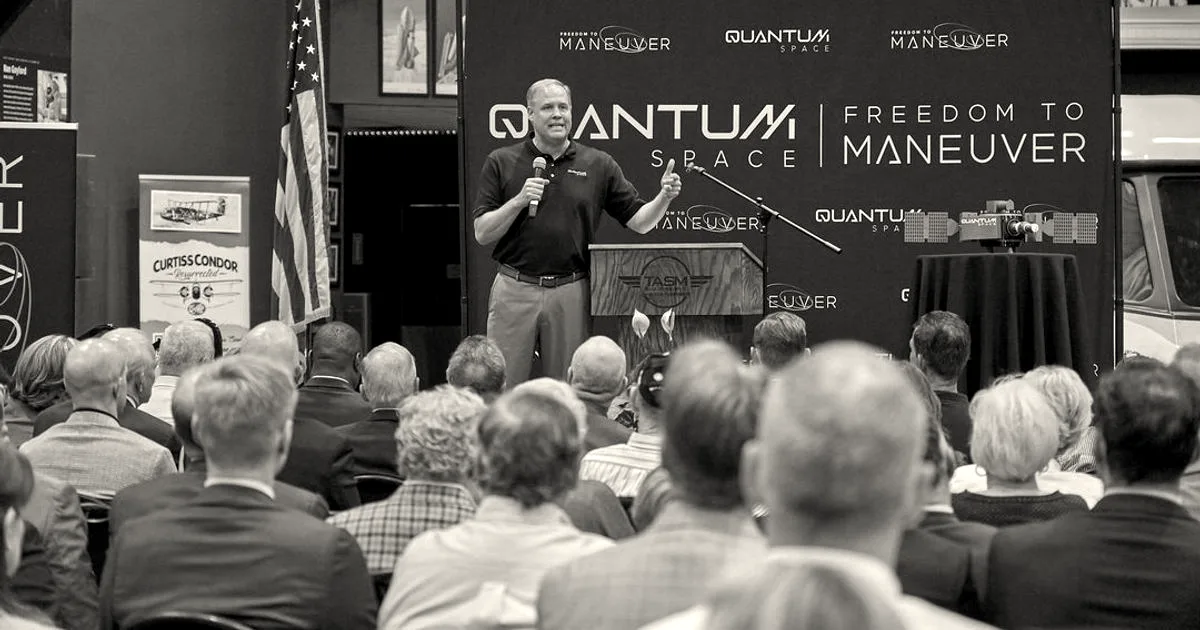
Quantum Space, a startup launched in 2020, has announced plans to go public through a $1.2 billion merger with a Special Purpose Acquisition Company (SPAC). The transaction is expected to raise $300 million in private investment alongside public proceeds. The company plans to use the capital to build manufacturing facilities in Tulsa, Oklahoma. The deal is sponsored by Mike Blitzer, the financier who previously helped bring Intuitive Machines to public markets. This public listing follows a trend of space sector companies utilizing SPAC mergers to transition to public markets.
The company is led by founder Kam Ghaffarian and CEO Jim Bridenstine, a former NASA administrator. Ghaffarian previously backed Intuitive Machines, a company now valued at $6.4 billion. Quantum Space is positioning its spacecraft product, Ranger, to meet growing U.S. national security requirements. According to founder Kam Ghaffarian, “Defense spending, space infrastructure, and America’s strategic priorities in orbit are converging at exactly the moment Quantum Space is ready to scale.” CEO Jim Bridenstine stated that the company is “designed specifically for the national security,” as the U.S. Space Force seeks maneuverable spacecraft capable of moving between orbits to monitor spacecraft fielded by Russia and China. Quantum Space is currently involved in six government development programs.
To scale its production, Quantum Space aims to produce one Ranger per quarter by the end of 2028, with plans to launch its first Ranger prototype to orbit in 2027. The company was selected to join Andromeda, a $6.2 billion government contract effort for space-based reconnaissance. To secure funded missions starting in 2030, Quantum Space must win specific task orders. In doing so, it faces competition from defense contractors like Lockheed Martin, Northrop Grumman, and Boeing’s Millennium Space Systems, as well as True Anomaly, a startup that has raised $1 billion from venture investors. This competitive landscape highlights the pressure on Quantum Space to scale its manufacturing capabilities in Oklahoma.
The Space Force’s requirements are growing as the military seeks spacecraft that can move between orbits and rendezvous with other spacecraft. The Ranger spacecraft is designed to match and exceed capabilities fielded by competitors, and is expected to carry significant fuel to remain in orbits over long periods to watch rival satellites.
Why it matters
Quantum Space is leveraging a $1.2 billion SPAC merger to scale production of maneuverable spacecraft, positioning itself to capture growing demand from the U.S. military and Space Force for orbital reconnaissance.