Chips & Hardware
Pacific Fusion tests new method to cut fusion reactor costs
Pacific Fusion announced experimental results at Sandia National Laboratories that could eliminate costly lasers from its fusion reactor approach, potentially reducing overall power production costs.
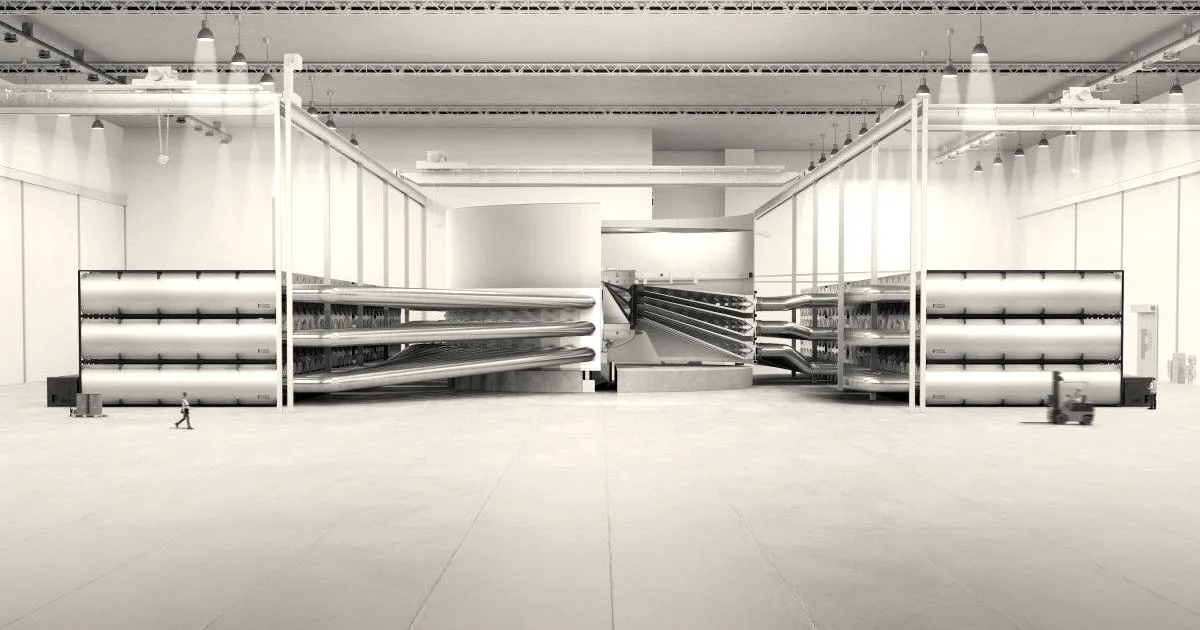
Pacific Fusion announced results from a series of experiments conducted at Sandia National Laboratories (a US research facility) that could eliminate expensive components like lasers from its reactor design. The startup is pursuing pulser-driven inertial confinement fusion (ICF)—a fusion approach that uses electrical pulses to compress fuel. This method is conceptually similar to the laser-based fusion experiments conducted at the National Ignition Facility, a US research facility. However, instead of using lasers to initiate compression, Pacific Fusion plans to use massive electrical pulses to create a magnetic field around a fuel pellet, compressing it in less than 100 billionths of a second.
Historically, pulser-driven ICF has required an initial energy boost to preheat the fuel before compression, typically on the order of 5% to 10% of the system’s total energy. This preheating has relied on external lasers and magnets, which add significant upfront complexity and cost. In its recent experiments, Pacific Fusion adjusted the design of the cylinder encasing the fuel pellet to allow a portion of the magnetic field to seep into the fuel before compression. According to co-founder and CTO Keith LeChien, this adjustment requires a very small fraction of the overall energy—much less than 1%—making the energy draw effectively unnoticeable. The cylinder casing is manufactured using a process that has been honed and perfected over 100-plus years. Eliminating the preheating laser system would significantly reduce costs, as LeChien noted that the scale of laser needed to preheat these systems at high gain is north of $100 million.
The development comes as most fusion startups are targeting the early to mid-2030s to switch on their first commercial fusion power plants. Competitors are taking different, capital-intensive paths; for instance, Commonwealth Fusion Systems is building a massive reactor that costs several hundred million dollars, which is scheduled to be turned on next year. While many fusion concepts rely heavily on computer modeling, Pacific Fusion emphasizes the importance of physical validation. “It’s a very different game to simulate something, build it, test it, and have it work. Closing that loop is hard,” LeChien said.
Why it matters
Pacific Fusion’s experiments suggest a path to reducing the cost of fusion power by eliminating expensive components like lasers, addressing the industry’s primary challenge of making fusion economically competitive.