Chips & Hardware
Nvidia unveils DLSS 5 with ambitions beyond gaming
Nvidia launched DLSS 5, an AI graphics technology that could extend its generative AI and structured data fusion approach from gaming into enterprise computing.
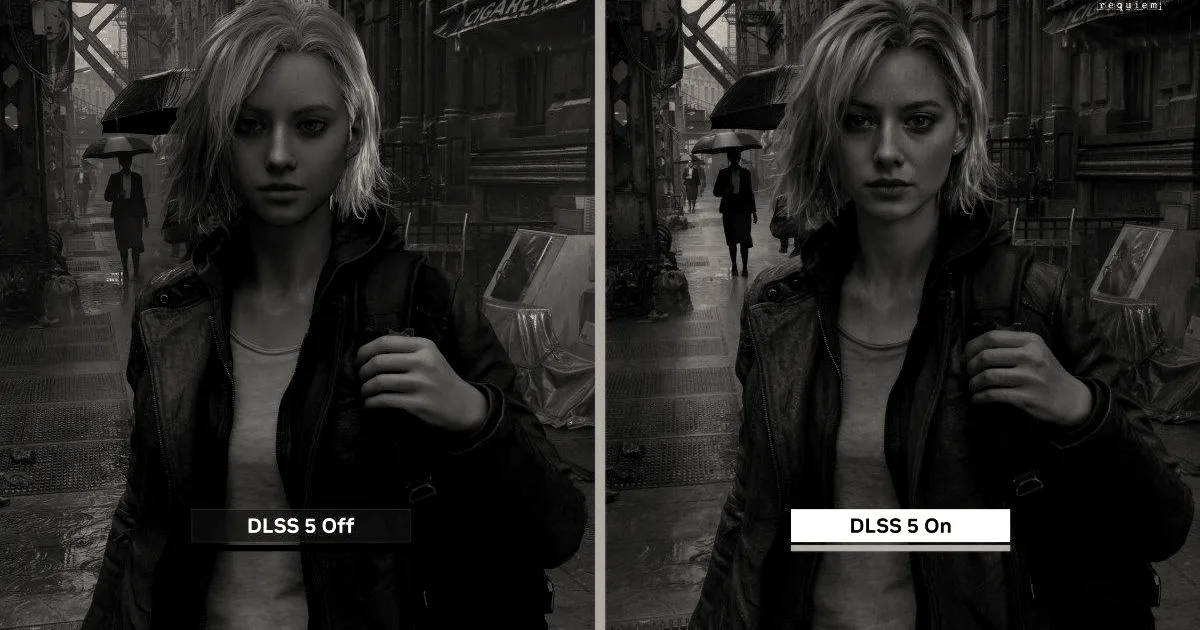
On Monday, during his keynote speech at Nvidia’s GPU Technology Conference (GTC), CEO Jensen Huang introduced Deep Learning Super Sampling 5 (DLSS 5). This new version of the chipmaker’s AI graphics technology is designed to make video games more realistic while using less compute power. The system achieves this by combining traditional 3D graphics data with generative AI models that can predict and fill in parts of an image. This approach allows Nvidia’s graphics processing units (GPUs) to produce detailed scenes and lifelike characters without the need to render every individual element from scratch.
Huang explained that the technology fuses controllable 3D graphics, which represent the ground truth of virtual worlds, and structured data with generative AI and probabilistic computing. He noted that while one of these systems is completely predictive, the other is probabilistic yet highly realistic. According to Huang, combining these two concepts—structured data and generative AI—enables developers to create content that is beautiful, amazing, and controllable. This integration allows the hardware to generate highly detailed virtual environments more efficiently by relying on probabilistic predictions to fill in parts of an image rather than rendering every element from scratch.
Although gaming represents a smaller portion of Nvidia’s revenue today than it has historically, it is the industry that built the company. Huang framed the approach used in DLSS 5 as an example of a broader computing shift, suggesting that the method could extend beyond gaming and into enterprise computing. “This concept of fusing structured information and generative AI will repeat itself in one industry after another,” said Nvidia CEO Jensen Huang. He emphasized that structured data serves as the foundation for building trustworthy AI systems across these various sectors.
The executive pointed to enterprise data platforms Snowflake, Databricks, and BigQuery as examples of structured datasets that future AI systems will analyze and generate insights from. Huang stated that structured data is the foundation of trustworthy AI. In the future, he explained, these data structures will be used by AI, which will operate much faster than humans. He added that future agents will utilize both structured databases and unstructured, generative databases, noting that this generative database represents the vast majority of the world.
Why it matters
Nvidia is positioning its DLSS 5 graphics technology as a broader computing shift, suggesting that the fusion of structured data and generative AI used in gaming could be applied to enterprise computing and future AI agents.