Chips & Hardware
Nvidia sends its GPUs to the moon
Lunar Outpost's next moon rover will run on Nvidia's Jetson chips to control its lidar system, likely making it the first GPU ever to operate on the lunar surface.
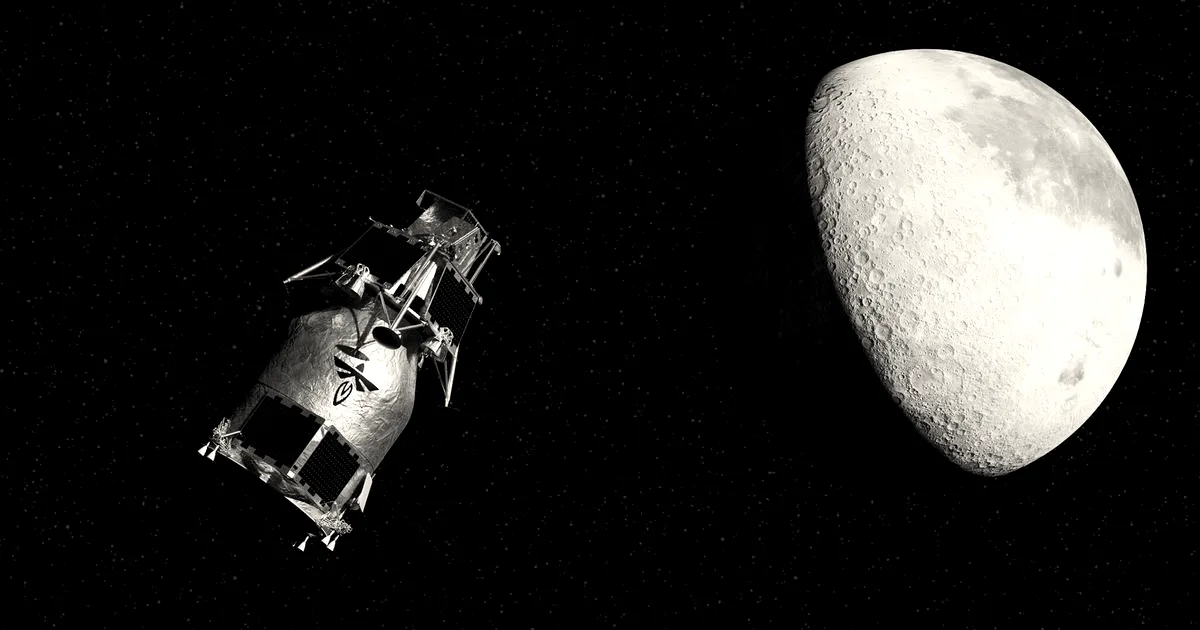
Lunar Outpost, a startup building robotics for space infrastructure, announced on Thursday that its next moon rover will use Nvidia’s Jetson chips to control its lidar system. When it does, the rover is likely to carry the first GPU ever to reach the lunar surface. “We’re taking the Nvidia Jetson and comparing it to our flight compute platform that has a little bit more spaceflight heritage,” said Lunar Outpost CEO Justin Cyrus, describing the comparison as a way to weigh the pros and cons of adopting more capable GPU-powered systems in extreme environments.
The rover’s flight is part of a broader NASA campaign that pays private companies to explore the lunar surface ahead of plans to return human astronauts, perhaps as soon as 2028. Modeled on NASA’s earlier work with SpaceX, the program asks tech companies to build vehicles that carry scientific sensors to the moon, mapping its terrain and searching for substances like water that could prove useful — or even lucrative — to extract.
Nvidia is pursuing the moon on more than one front. It recently announced a partnership with Firefly Aerospace, the first private company to safely land a robot on the lunar surface, that will put the Jetson platform on a satellite orbiting the moon to process imagery. That satellite is meant to gather data for scientists mapping the moon’s surface while also tracking the growing number of robots operating there.
Lunar Outpost’s rover will fly aboard a lander built by Intuitive Machines, carrying its sensor package into craters and other terrain that is difficult to survey from orbit. A following mission is planned to explore Reiner Gamma, a site where a magnetic anomaly has puzzled scientists. Each mission is expected to launch on a Falcon 9 rocket before the end of the year.
Jetson is less well known than Nvidia’s flagship AI chips like Blackwell and Vera Rubin, but it is a compact, power-efficient platform built for physical AI systems that need to process sensor data locally. Space poses unusual challenges for GPUs: most that operate today sit in orbit close to Earth, relatively shielded from radiation and extreme temperature swings, while the lunar surface is far more exposed to both as the moon cycles through its phases.
Lunar Outpost has several smaller autonomous rovers scheduled to launch in the next few years, plus a larger vehicle, Pegasus, designed to carry astronauts. Pegasus is waiting on a launch vehicle from Jeff Bezos’ Blue Origin, which suffered a launch anomaly this summer; it remains unclear when that rocket will return to flight, though Cyrus said the company still expects to be on track for NASA’s 2028 timeline.
Why it matters
Nvidia’s push to put GPUs on the moon — through Lunar Outpost’s rover and its satellite deal with Firefly Aerospace — signals the AI chip race extending beyond data centers into the infrastructure NASA hopes will support a sustained human and robotic presence on the moon.