Chips & Hardware
Nuro begins autonomous vehicle testing in Tokyo
Nuro has begun testing its autonomous vehicle technology in Tokyo, marking the startup's first overseas expansion since pivoting its business model to focus on licensing.
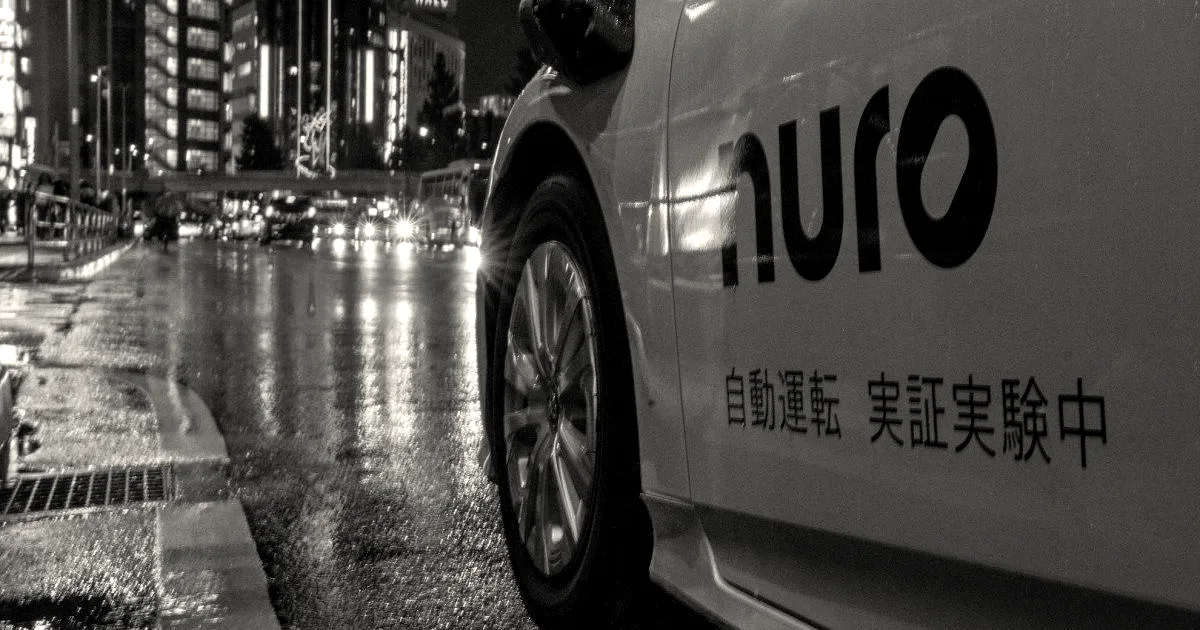
Silicon Valley-based autonomous vehicle startup Nuro has launched testing of its self-driving technology on public roads in Tokyo. The move, which began last month, represents the company’s first overseas expansion. It comes after Nuro opened offices in Tokyo last August. The expansion marks a significant milestone for the startup, which was founded in 2016 and initially focused on developing and operating a fleet of low-speed, on-road delivery bots. However, in 2024, Nuro ditched its low-speed bots to pivot its business model toward licensing its technology to automakers and mobility providers.
Nuro’s autonomy stack is built on an end-to-end AI foundation model, an architecture where the system learns as it drives. The company utilizes a strategy it calls “zero-shot autonomous driving”—an AI approach that allows the software to navigate public roads without prior training on local driving data. According to Nuro, this model enabled its software to autonomously navigate Tokyo’s streets without any prior training on Japanese driving data. This end-to-end AI approach is similar to the strategy used by U.K.-based competitor Wayve, which recently raised $1.2 billion.
To address safety, Nuro conducts closed-course testing of each new release of its universal autonomy model, evaluating performance and testing edge cases using simulation. On public roads in Tokyo, the vehicles operate with human safety operators behind the wheel as backup. During these tests, the software operates in “shadow mode”—a testing method where the software generates driving commands to see how it would react, but does not actually send those commands to the vehicle controls. Instead, the vehicles are manually driven while Nuro checks the results to determine if the system is ready to operate autonomously.
The startup has raised significant capital to support its technology. In its blog post, Nuro suggested that there will be future expansions, stating, “Our autonomous operations in Tokyo are the beginning of the compounding benefits of global deployment.”
Nuro’s financial backing includes:
- A $940 million investment from the SoftBank Vision Fund in 2019.
- A $203 million Series E round raised last year, which included existing backer Baillie Gifford and new investors Icehouse Ventures, Kindred Ventures, Nvidia, and Pledge Ventures.
- A multi-hundred-million-dollar investment from Uber, which participated in the Series E round as part of a broader deal involving electric car maker Lucid.
Why it matters
Nuro’s move to Japan represents a critical test of its “zero-shot” AI strategy, proving whether its licensing-focused business model can scale globally beyond its Silicon Valley origins.