Chips & Hardware
IDC and Counterpoint predict record smartphone shipment decline
IDC and Counterpoint predict a record smartphone shipment decline in 2026 as memory shortages force price hikes and structural market changes.
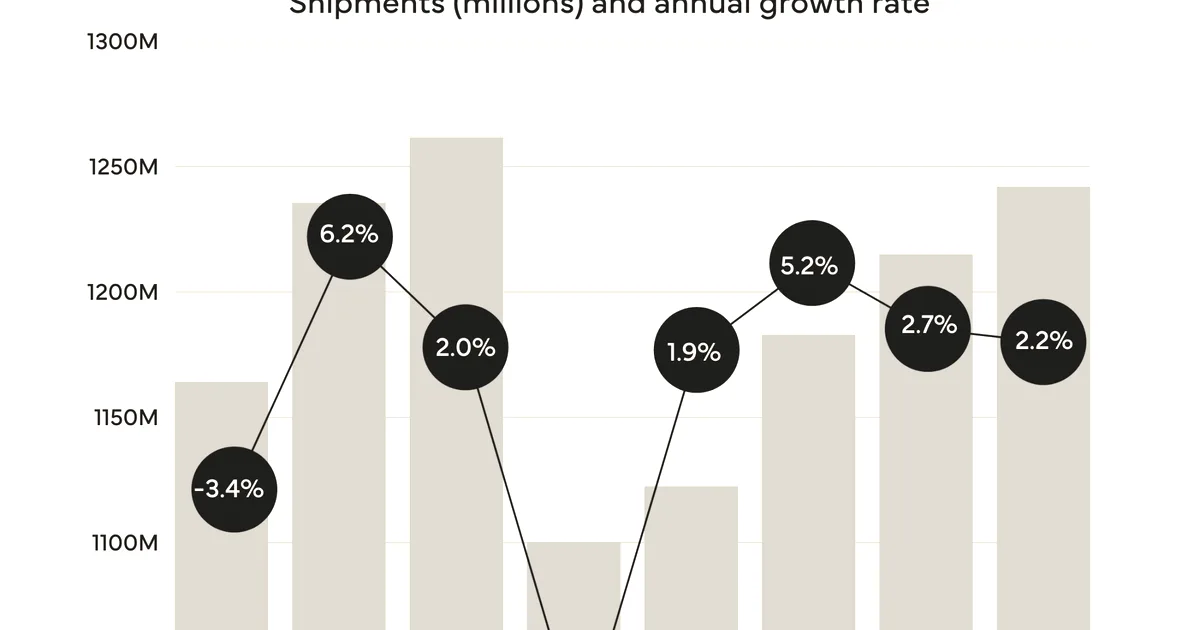
A memory shortage driven by artificial intelligence demand is causing a smartphone shipment dip, according to forecasts from analyst firms IDC and Counterpoint. IDC predicts that smartphone shipments will plummet by 12.9% this year, dropping from the 1.26 billion devices shipped in 2025 to a predicted 1.12 billion in 2026. Counterpoint also predicted that the market will dip by 12% this year.
The supply crisis is triggering what analysts describe as a structural reset of the entire market. Nabila Popal, senior research director with IDC’s Worldwide Quarterly Mobile Phone Tracker, stated that the memory crisis will cause more than a temporary decline, fundamentally reshaping the long-term total addressable market (TAM), the vendor landscape, and the product mix. Popal expects consolidation as smaller players exit and low-end vendors face sharp shipment declines amid supply constraints and lower demand at higher price points. Popal noted that the average retail price of a smartphone is expected to rise by 14%, with the average selling price (ASP) projected to rise to a record $523 this year. This rise in component costs is expected to make the sub-$100 smartphone permanently uneconomical. Meanwhile, Counterpoint predicts that the sub-$200 smartphone segment will see a 20% dip.
The impact of these supply constraints varies by region, with several markets projected to experience sharp contractions:
- Middle East and Africa: Shipments are expected to drop more than 20% year-over-year.
- Asia Pacific: Shipments are projected to decline by 13.1% (excluding Japan).
- China: Shipments are expected to drop by 10.5%.
The supply constraints are expected to persist, with IDC predicting that RAM prices will stabilize by mid-2027. Yang Wang, Principal Analyst at Counterpoint, stated that the impact is expected to continue through H2 2027, noting that low-power double data rate 4 (LPDDR4) RAM supply is shrinking faster than expected. Original equipment manufacturers (OEMs) are already responding with launch delays, streamlined portfolios, and specification trade-offs, with 10% to 20% price increases observed across some Android OEM portfolios in January 2026. Carl Pei, co-founder and CEO of smartphone manufacturer Nothing, also warned that smartphones will cost more in 2026. According to Pei, “Brands now face a simple choice: raise prices by 30% or more in some cases, or downgrade specs. The ‘more specs for less money’ model that many value brands were built on is no longer sustainable in 2026.”
Why it matters
A massive shortage of RAM, driven by AI demand, is causing a structural reset of the smartphone market, leading to record shipment declines and rising retail prices.