Chips & Hardware
Genesis AI unveils GENE-26.5 model and full-stack robotics approach
Genesis AI has unveiled its GENE-26.5 model and a full-stack robotics approach, partnering with Wuji Tech to design human-like robotic hands for better data collection.
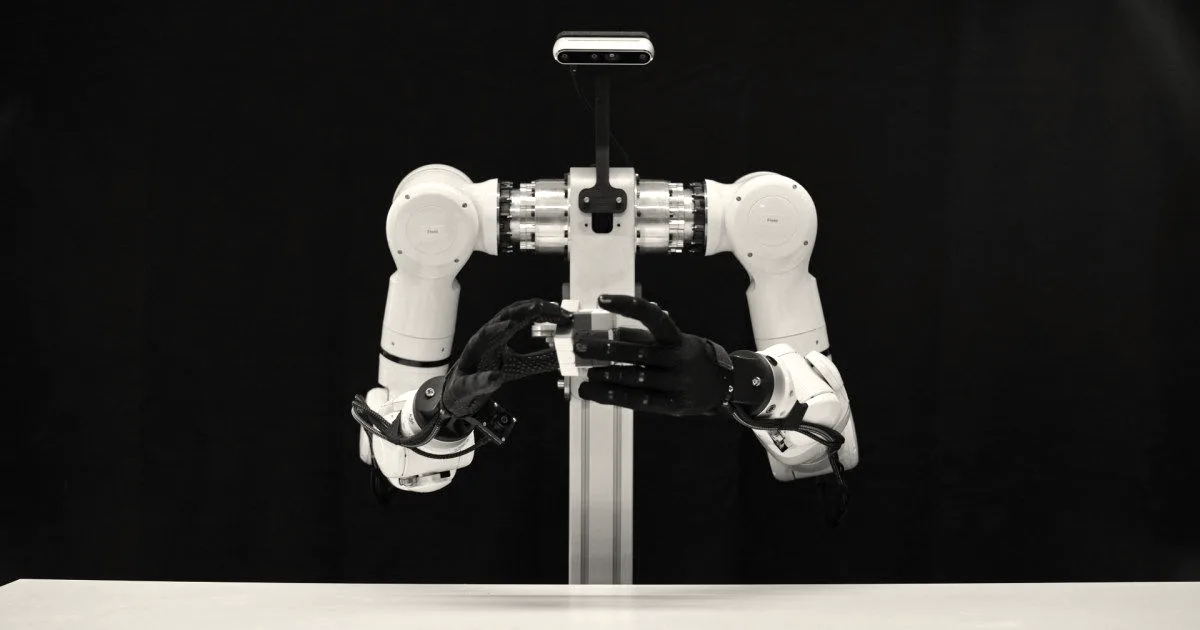
Genesis AI has launched its first model, GENE-26.5, marking a shift to a full-stack robotics strategy—defined as the integration of both hardware and software. To support this approach, the startup partnered with hardware partner Wuji Tech to design robotic hands. According to co-founder and CEO Zhou Xian, the company realized it needed control over its hardware because a better model yields better intelligence, which had always been their primary goal. Consequently, the company decided to adopt a full-stack approach.
The company’s strategy targets what researchers call the embodiment gap—the difficulty of transferring data between human and robotic forms. While Zhou acknowledged there are probably 50 or 100 robotic hand companies, Genesis AI is attempting to bypass this gap by designing a hand that mimics human dimensions. The startup has also developed a sensor-loaded glove to collect human data. President and co-founder Théophile Gervet, a former research scientist at Mistral AI, explained that this hardware allows the company to collect far more data than was previously possible to train a model capable of performing more tasks. Zhou added that because model evaluation is the primary bottleneck for iteration speed, this system helps accelerate model training.
However, this data collection method introduces sensitive labor questions. The startup’s model relies on workers wearing these sensor-loaded gloves and cameras during their daily jobs, raising the allegation of whether workers would be happy to wear the very gloves and cameras that could train robots to replace them. When asked about these implications, Gervet acknowledged that the company has not yet finalized the details of these arrangements.
The startup is scaling its operations using its initial capital and expanding its workforce across Europe and the U.S. Key details of its funding and headcount include:
- Funding: A $105 million seed round raised in July 2025. Investors in the round included Khosla Ventures, Eclipse, Bpifrance, HSG, Eric Schmidt, Xavier Niel, Daniela Rus, and Vladlen Koltun.
- Headcount: A total of 60 employees.
- Geographic distribution: Approximately 40-45% of the headcount is located in Europe, while 50-55% is based in the U.S.
The company operates with offices in Paris, California, and London. Gervet cited the high density of talent across the continent as a primary reason for establishing a presence in Europe. Looking ahead, Zhou stated that Genesis AI plans to reveal a full-body robot shortly. “Our goal is to build the most capable robotic system,” said Zhou, who serves as the co-founder and CEO of Genesis AI.
Why it matters
Genesis AI is moving to a full-stack approach, combining its own robotic hardware with its AI model to solve the embodiment gap and accelerate data collection for training. By integrating hardware and software, the company aims to bypass traditional data bottlenecks in robotics development.