Startups & Funding
Messaging game startup Jest challenges app store model
Jest emerged from stealth with $7 million in seed funding to challenge app store dominance by distributing games directly within messaging apps using RCS technology.
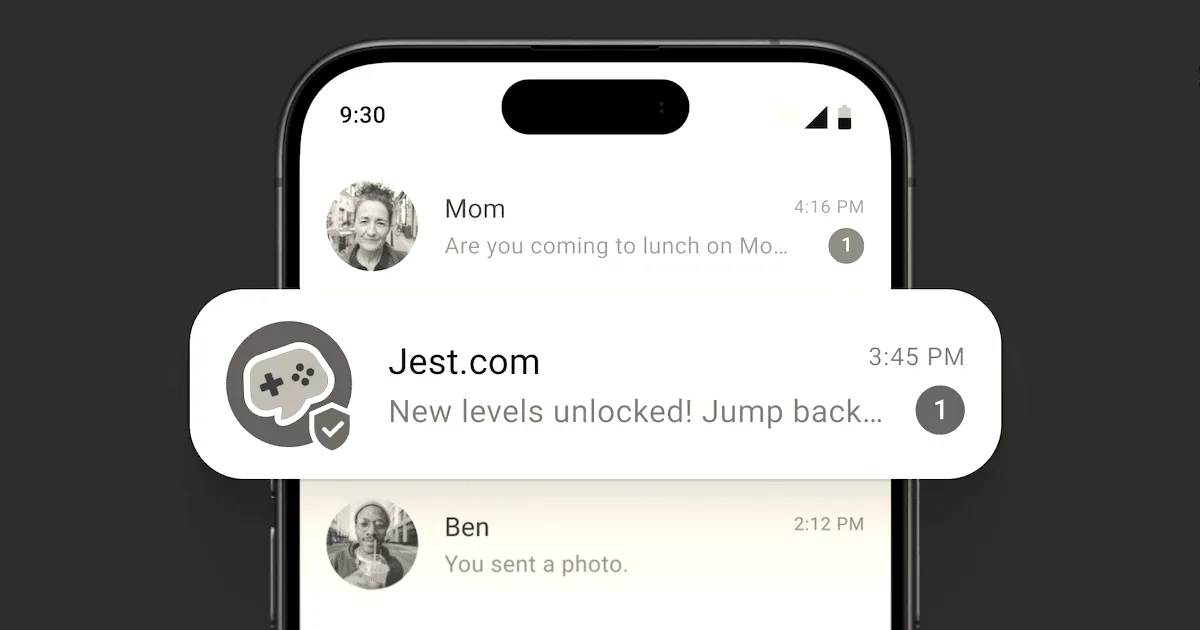
Jest has emerged from stealth with $7 million in seed funding to build a marketplace for messaging games. The startup, led by CEO and co-founder Deyan Vitanov, aims to challenge the traditional app store model by distributing games directly within messaging applications. The seed funding round was led by the venture capital firm Innovation Endeavors, with the capital designated to scale the platform and onboard its first group of gaming studios.
The platform’s launch coincides with the rise of Rich Communication Services (RCS), an enhanced version of SMS that enables interactive features and rich media. Apple joined the RCS movement in 2024, and by May 2025, the technology supported over a billion messages daily in the U.S., according to data from Google. By distributing games within the messaging inbox, Jest bypasses traditional app stores, which typically take up to 30% of developer earnings. Instead, Jest offers a 90/10 revenue split, where 90% of earnings go directly to the developers, directly challenging the 30% commission typically taken by major app stores.
This distribution model arrives as mobile game downloads are declining. In 2025, mobile games were downloaded 39.4 billion times, representing an 8.6% year-over-year decline following a 6.6% drop from 2023 to 2024. By the end of January, four months into its beta phase, Jest reported more than 1 million messaging games played and over 300,000 messages exchanged.
“We’re seeing 3-4 times better retention than traditional mobile apps. That’s a fundamental shift in the engagement curve. On the user acquisition front, we’ve completely validated that people will sign up and play games through messaging, with our early partners reporting 30-60% lower acquisition costs compared to mobile apps. It’s remarkably simple. Just tap on a link, and you’re in,” Vitanov said. To incentivize developers, Jest also uses a network effect to split economics when one studio acquires a user but another monetizes them. Under this model, the revenue is split with 70% going to the monetizing studio, 20% going to the acquiring studio, and 10% going to Jest.
Jest is currently live in the U.S. and is set to expand to 14 additional countries by the third quarter of 2026. To support developers, the company has launched a Games Fund that deploys capital across three tiers:
- $1 million for flagship titles
- $200,000 for mid-stage titles
- $40,000 for exploratory projects
Why it matters
Jest is attempting to bypass the traditional app store model by leveraging the ubiquity of messaging apps, offering developers a more favorable revenue split and lower acquisition costs.