Markets & Business
General Fusion debuts on Nasdaq as first public fusion company
General Fusion has debuted on the Nasdaq as the first publicly traded fusion power company, with its stock rallying 40% on its first day.
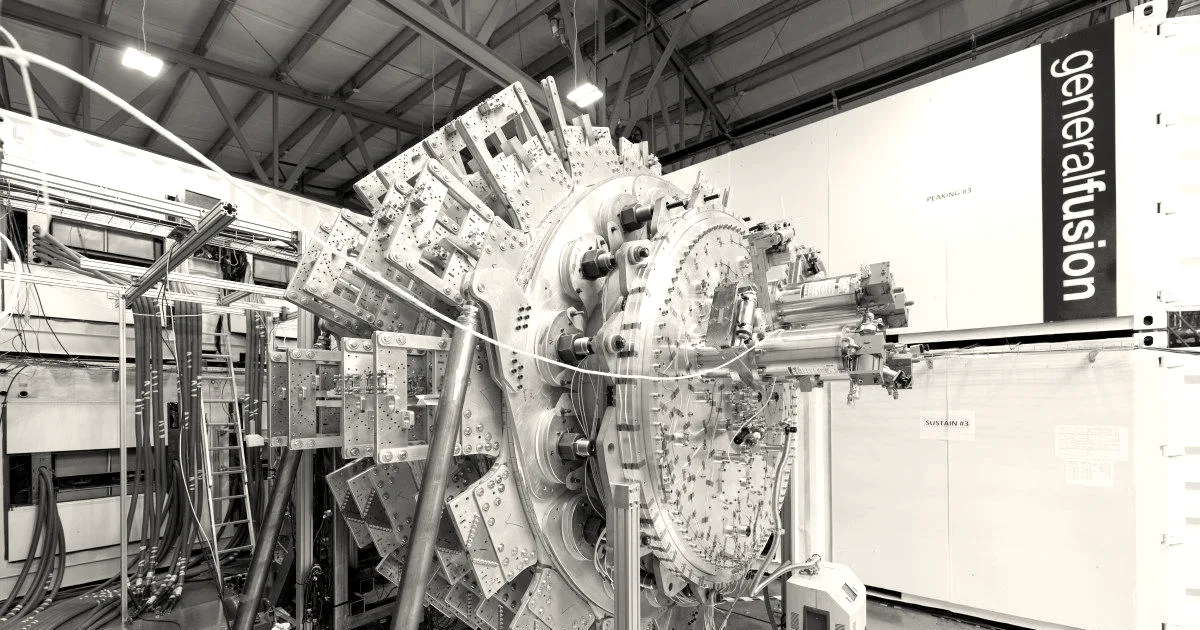
General Fusion began trading on the Nasdaq today under the ticker GFUZ, becoming the first publicly listed fusion power company and beating Trump-backed competitor TAE Technologies to the market by several months. The stock is now up 40% from its $12.85 starting price, as investors responded to the debut.
The company completed its merger with Spring Valley Acquisition Corp. III last week, following the January announcement of the deal. Without redemptions — the process where SPAC investors choose to take cash back instead of shares in the merged company — the transaction could have added as much as $230 million to General Fusion’s balance sheet. But according to the Globe and Mail, the company might receive less than $30 million after redemptions and fees. General Fusion also raised $108 million from private investors alongside the de-SPAC (going public by merging with a special purpose acquisition company), bringing its total cash to about $150 million.
The listing follows a rough stretch financially. General Fusion reportedly was running short on cash and struggling to raise more before the reverse merger. It had reportedly been attempting to raise $125 million before May 2025, but when that funding failed to materialize, the company laid off at least 25% of its employees. Three months later, existing investors reportedly put in another $22 million in what was described as a “pay to play” round — a structure in which existing investors must participate or face penalties such as dilution of their shares.
Founded in 2002, General Fusion is one of the oldest fusion power companies and has raised over $600 million from private investors to develop its magnetized target fusion technology. The approach uses electromagnetic fields to create magnetized plasma inside a chamber lined with liquid lithium, then relies on rings of pistons — which the company calls “synchronized mechanical drivers” — to compress the lithium around the fusion fuel until it releases energy. Funding delays have pushed back the company’s breakeven milestone, likely to 2028 or later, though General Fusion still says it is aiming to turn on its first power plant by approximately 2035.
Why it matters
General Fusion’s public debut marks a milestone for the fusion sector, but its high SPAC redemptions and delayed timeline highlight the financial hurdles of commercializing fusion energy technology.