Startups & Funding
Integrate raises $17M to modernize defense project management
Integrate raised $17 million in a Series A round led by FPV Ventures to scale its secure project management platform for government and defense contractors.
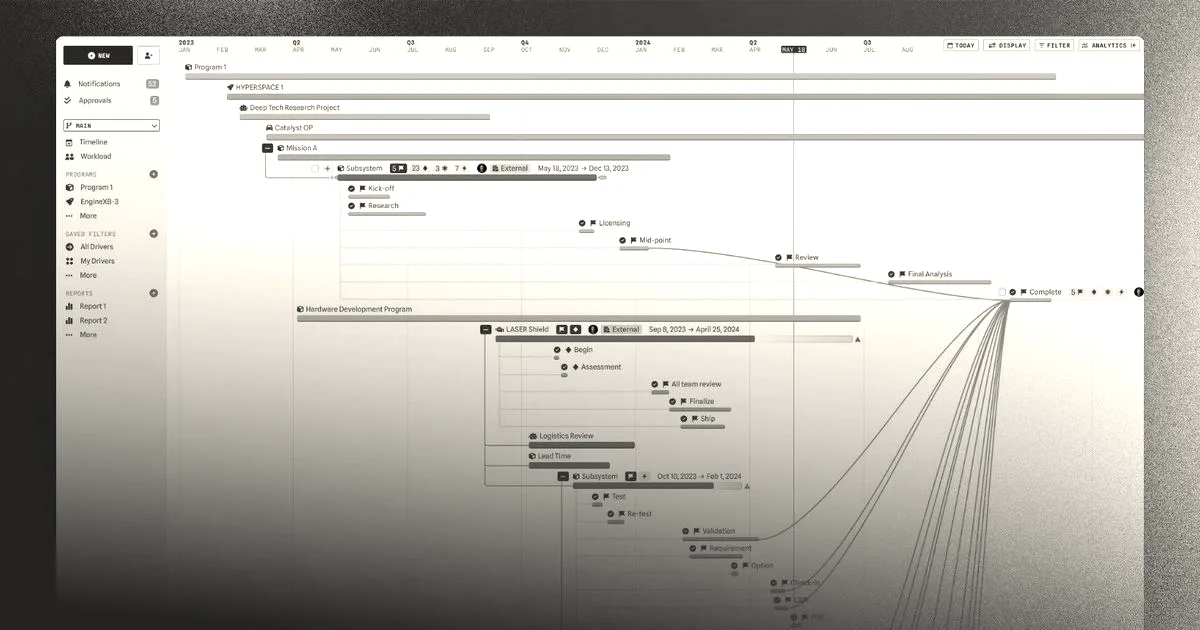
Seattle-based startup Integrate has secured $17 million in a Series A round—a venture capital financing round—led by FPV Ventures. The company, which launched in early 2022, previously won a $25 million, five-year contract from the U.S. Space Force, a branch of the U.S. military. Integrate aims to modernize how U.S. defense agencies and private contractors manage complex projects. Wesley Chan, co-founder and managing partner at FPV Ventures, led the investment, noting that the startup addresses a critical operational bottleneck for the government and its private-sector partners.
Before founding Integrate, John Conafay spent his career leading business development at aerospace companies, where he repeatedly encountered software hurdles when collaborating on government contracts. Teams and their federal counterparts were often forced to rely on a tedious exchange of PDFs and Excel files because mainstream project management tools were not secure enough to meet strict government security standards. To solve this, Conafay designed Integrate to allow private companies, the U.S. Department of Defense, and other government agencies to collaborate on classified projects—which carry a government security designation.
Conafay argues that software must be built from the ground up to satisfy these requirements, asserting that it is technically difficult for existing project management companies to re-architect their software for government purposes. “If you don’t build something from the ground up with government requirements, you can’t really go back and re-architect software that exists for government purposes,” Conafay said.
The platform is built to handle the extreme complexity of multi-entity projects, allowing different organizations to collaborate securely while keeping sensitive details hidden from other participants. It is designed to coordinate massive, multi-year projects where thousands of partners must stay in sync. For example, some of the startup’s work for the U.S. Space Force involves rocket deployments. Conafay explained that the agency must coordinate tens of satellites on a single launch across dozens of missions. He noted that the complexity of these operations is extreme, and the agency uses Integrate to coordinate them.
Integrate intends to grow by selling its software to other branches of the U.S. military, including the Navy, the Army, and the intelligence community, as well as to the private companies that serve them.
Why it matters
Integrate is addressing a critical technical bottleneck in defense project management. By providing a secure platform for classified, multi-entity projects, the startup enables private contractors and government agencies to collaborate without compromising sensitive defense data.