AI & Models
Emergent launches Wingman to bring AI agents to messaging apps
Emergent has launched Wingman, a messaging-first autonomous AI agent, as the Bengaluru-based startup expands its vibe-coding platform into background task execution.
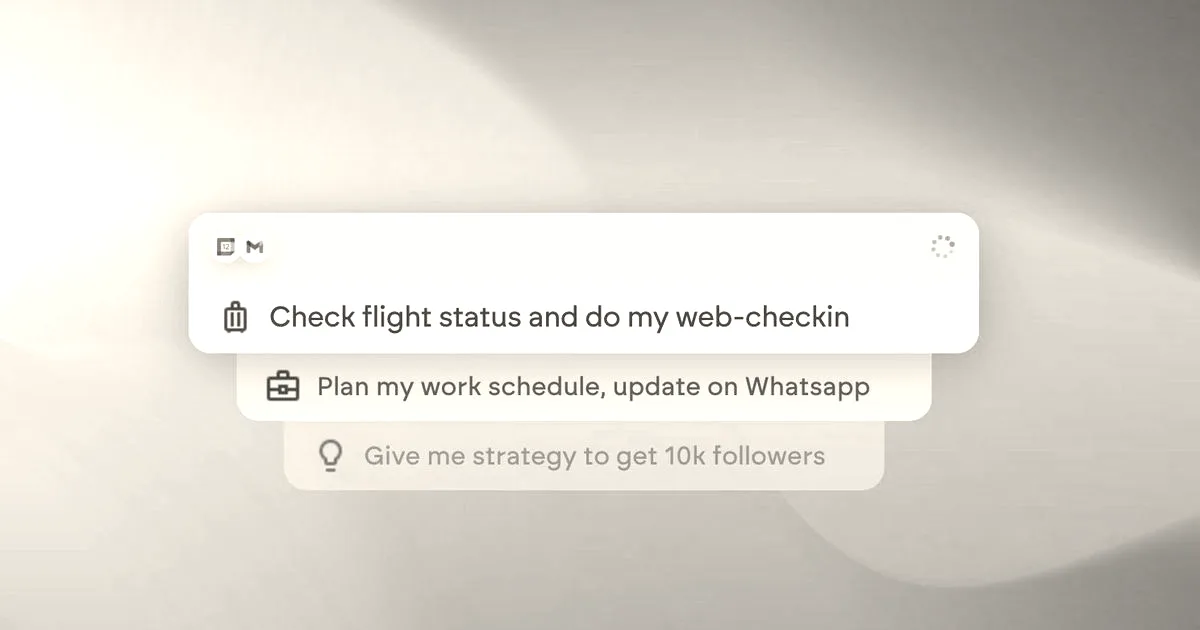
Bengaluru-based startup Emergent has launched Wingman, a messaging-first autonomous AI agent designed to handle routine tasks across workflows. The company initially gained traction for its vibe-coding platform—defined as a method of building software via natural-language prompts—which competes with tools like Cursor and Replit. Emergent reports that more than 8 million builders have used this platform to create and deploy software, with over 1.5 million monthly active users. Founded in 2025, the startup raised $70 million in January at a valuation of $300 million. Investors in the company include SoftBank, Khosla Ventures, and Lightspeed Venture Partners.
Wingman is designed to operate through messaging platforms including WhatsApp, Telegram, and Apple’s iMessage, allowing users to assign and monitor tasks through chat. To manage how the agent operates, Emergent introduced “trust boundaries,” defined as a feature enabling the agent to carry out routine tasks autonomously while requiring user approval for more consequential actions. Mukund Jha, co-founder and CEO of Emergent, noted that the transition to execution was a natural progression. “The obvious next step for us was, can we help them not just build the software, but actually operate more autonomously through it?” Jha said. He explained that this shift moves users from software that supports a business to software that can actively help run it. Jha also noted that a significant amount of real work already happens through chat, voice, and email—such as asking for something, following up, sharing context, and making decisions—and that these channels will increasingly become the primary ways people work with AI agents.
The launch places Emergent in direct competition within the autonomous AI agent market, which includes projects like OpenClaw—formerly known as Clawdbot and Moltbot—and Claude by Anthropic. By integrating Wingman directly into existing messaging platforms, Emergent aims to address concerns around fully autonomous systems through its trust boundaries. However, the system still faces operational hurdles. According to Jha, Wingman struggles around consistency in really ambiguous situations, messy edge cases, unclear goals, or workflows where human judgment is needed.
Why it matters
Emergent is pivoting from its roots in vibe-coding to active execution, betting that the future of AI agents lies in the messaging apps where work already happens rather than new, standalone interfaces.