AI & Models
Google uses India as a testing ground for education AI
Google is using India as a proving ground for education AI, shifting its strategy away from one-size-fits-all products to adapt to diverse, decentralized, and unevenly resourced environments.
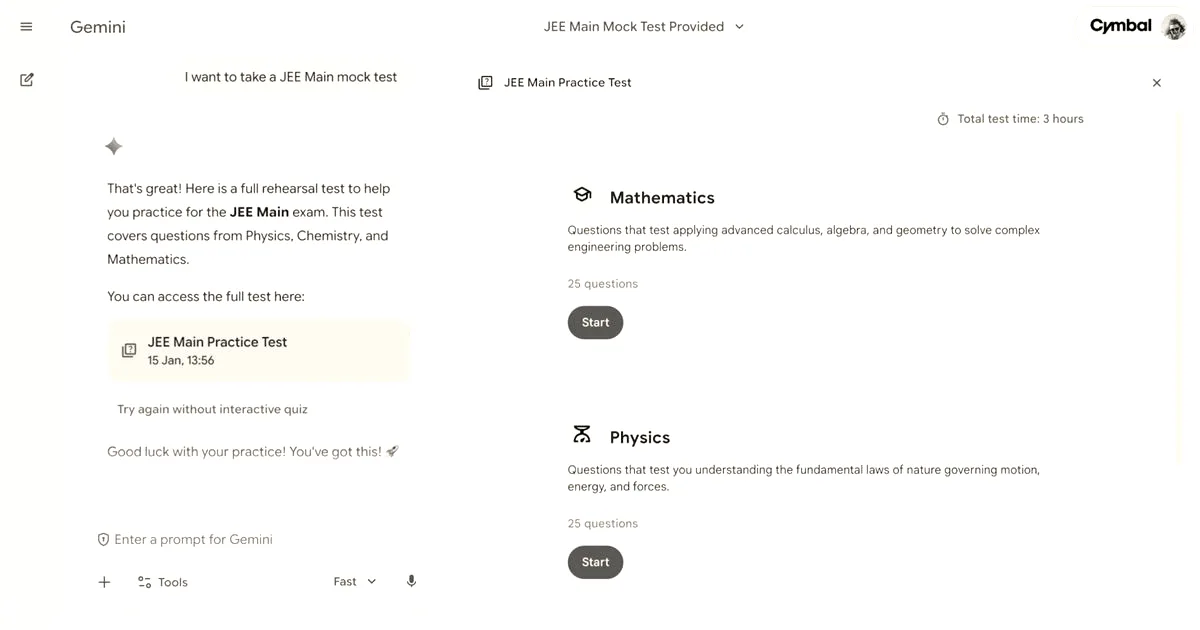
Google is using India as a primary testing ground for its education artificial intelligence, moving away from its traditional global product strategy to accommodate diverse, decentralized school systems. According to Chris Phillips, Google’s vice president and general manager for education, India has become a proving ground for the company’s education AI. The country, which has more than a billion internet users, now accounts for the highest global usage of Gemini for learning. This marks a shift for Google, which, like most Silicon Valley firms, has traditionally built products to scale globally. Phillips noted that AI in education cannot be rolled out as a single, centrally defined product. “We are not delivering a one-size-fits-all,” said Phillips. Instead, the company is seeing faster adoption of multimodal learning in India, combining video, audio, and images alongside text.
The scale of India’s education system forces Google to adapt. The country’s school system serves about 247 million students across nearly 1.47 million schools, supported by 10.1 million teachers, according to the Indian government’s Economic Survey. Its higher education system is also vast, with more than 43 million students enrolled in 2021-22, representing a 26.5% increase from 2014-15. To manage this decentralized and unevenly resourced environment, Google is designing its AI tools around teachers rather than students as the primary point of control. The company is focusing on tools that assist educators with planning, assessment, and classroom management, emphasizing that the teacher-student relationship is critical. Google is translating these early lessons into local deployments, including AI-powered preparation for the JEE Main (an engineering college entrance exam in India) through Gemini, and a teacher training program covering 40,000 Kendriya Vidyalaya (a system of central government schools in India) educators.
Google is not alone in targeting this market. Competitors like OpenAI and Microsoft are also vying for dominance in India’s education sector. OpenAI has established a local leadership presence by hiring Raghav Gupta, the former Coursera APAC managing director, as its India and APAC education head. Meanwhile, Microsoft has expanded partnerships with Indian institutions and edtech players, including Physics Wallah, to support AI-based learning and teacher training. However, this rapid integration of AI into classrooms faces scrutiny. According to India’s latest Economic Survey, which cited research from institutions including MIT, dependence on AI for creative work and writing tasks is contributing to cognitive atrophy and a deterioration of critical thinking capabilities.
Why it matters
India is serving as a critical testing ground for Google’s education AI, forcing the company to shift away from its traditional one-size-fits-all global product strategy to adapt to diverse, decentralized, and unevenly resourced environments.