Compute & Cloud
Orbital raises $5 million to build space data centers
Orbital has raised $5 million in seed funding to develop space-based data centers, hoping to launch its first data-processing spacecraft in 2028 once Starship is flying regularly.
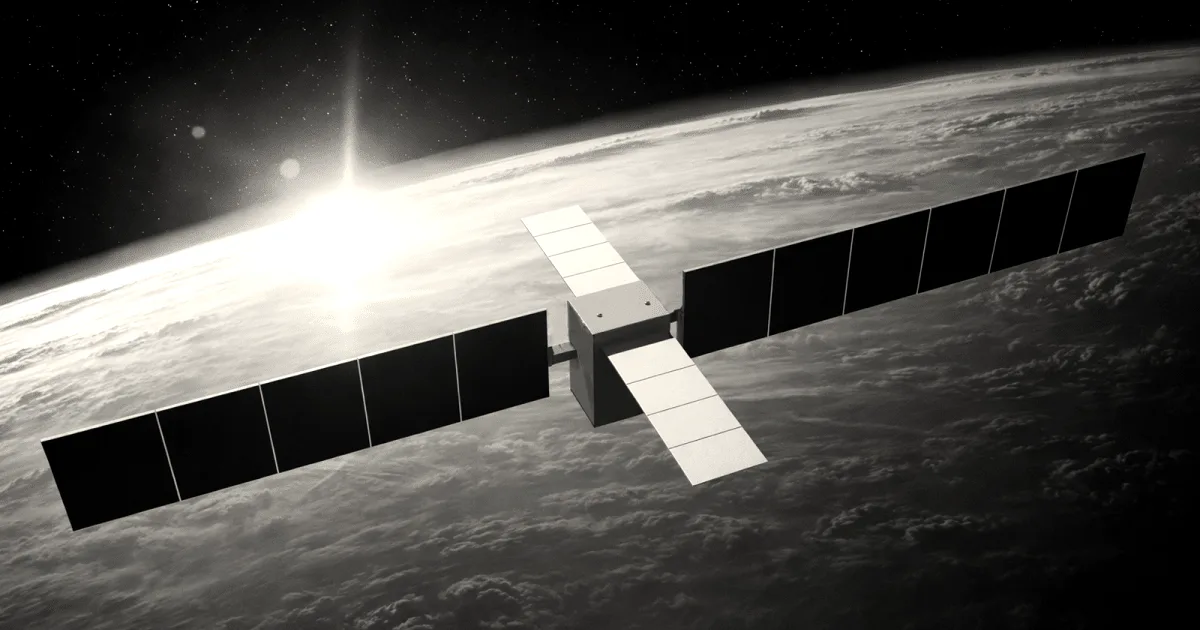
Orbital, a startup that emerged from Speedrun—the startup accelerator program of Andreessen Horowitz (a16z), a venture capital firm—has raised a $5 million seed round. The company plans to perform inference in space, promising to do so just as soon as Starship, SpaceX’s next-gen rocket, is flying regularly. Orbital hopes to launch its first data-processing spacecraft in 2028. Other investors in the seed round include Basis Set, Human Element, Wayfinder, Antler, Anti Fund, Ascent, Rubik, Zero Knowledge Ventures, LYVC, Feld Ventures, New Legacy, FNDR, UpHonest, and Asterisk.
The startup’s business model depends on the economic viability of Starship. According to Orbital founder and CEO Euwyn Poon, the price of the Falcon 9 rocket makes such space-based data centers economically unfeasible. To test its technology, Orbital’s Los Angeles-based team—which includes former employees of Amazon LEO, SpaceX, and Northrop Grumman—is preparing a demo flight to run an Nvidia Blackwell chip on a partner’s satellite. This test will evaluate the company’s radiation shielding and thermal management. By 2028, Orbital hopes to launch its first spacecraft equipped with Nvidia Space-1 Vera Rubin-class GPUs to perform piece-wise inference.
Orbital’s goal is to deploy 10,000 satellites to provide a distributed gigawatt of computing power, with each satellite delivering 100 kW of power. This ambition places it in a field of space-based compute startups:
- SpaceX: Elon Musk expects its AI satellites to produce up to 150 kW of power.
- Starcloud: The competitor expects to field 200 kW-rated spacecraft and already has a GPU in orbit.
- Cowboy Space Company: Another startup backed by Andreessen Horowitz that has decided to build its own rockets.
- Blue Origin: Jeff Bezos’s space company, which has announced plans to launch data centers using its New Glenn launch vehicle.
Poon, who previously founded the e-scooter company Spin in 2017 and scaled it to 250,000 scooters across 100 cities before selling it to Ford, is leveraging his operational experience to manage the aerospace project. Poon’s path to space data centers included buying an Nvidia A100 on a lark, co-locating it in a Santa Clara data center, and serving open-weight models. Andrew Chen, a partner at Andreessen Horowitz, noted that Poon’s background in scaling physical fleets translates to managing aerospace logistics. Chen added that venture firms are increasingly comfortable with timelines that might take a decade and cost $5 billion or more. “This kind of thing would have sounded crazy 10 years ago when we were all building mobile apps,” Chen said.
Why it matters
Orbital’s funding highlights a shift in the venture industry’s perspective on capital-intensive space projects, showing that a founder without prior aerospace experience can secure backing for a space data center company.