AI & Models
Apple brings AI-powered Siri to phones, laptops, and headsets
Apple is rolling out a revamped, AI-powered Siri across its hardware ecosystem, utilizing personal context and private cloud compute to process data while maintaining user privacy.
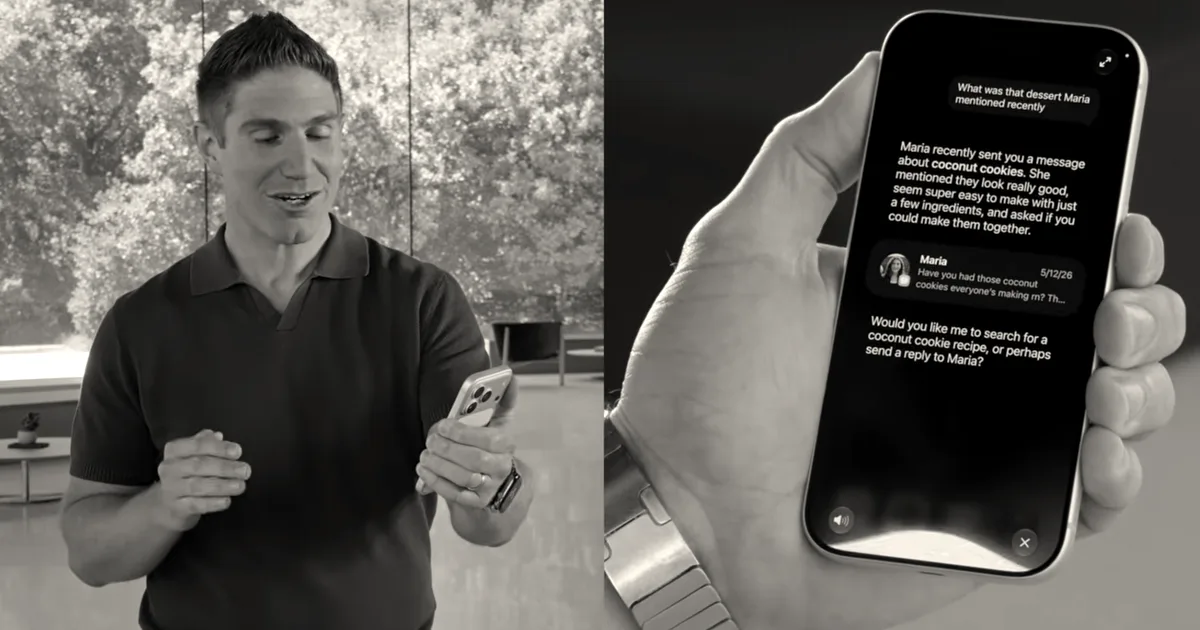
On Monday, during its WWDC keynote, Apple announced a revamped, AI-powered Siri for its phones, laptops, and mixed reality headsets. The update will bring the assistant to devices like the Apple Vision Pro—even if, as critics joke, only like three people currently use the headset. Apple stated that these updates will take advantage of hardware that is supposedly built for Apple Intelligence.
The updated assistant is designed to use personal context by drawing information from Apple-native apps, such as iMessage, Notes, Calendar, Mail, and Photos. During a demonstration, Justin Titi, an Apple senior director working on AI engineering, showed Siri searching across a phone to find a specific text from about a month ago, saving the user from scrolling through conversations across like 12 different apps. However, it remains unclear if Siri will integrate into non-native Apple apps, as it seems like this might be up to external developers. For complex tasks, Apple uses Private Cloud Compute (PCC) to process data over the cloud without exposing it to Apple. To prove the security of this architecture, the company is offering a $1 million bug bounty.
This shift toward an always-on assistant has sparked debate over whether outsourcing daily tasks to AI is truly necessary. Writer Calvin Kasulke questioned the trend of using AI to manage personal relationships and daily life admin. “I’m sorry, but all of the commercials that are like, ‘What if I had the computer buy my kid a birthday gift?’ I’m like, ‘What if you learned what your kid likes?’ … Like, I don’t know man, it sounds like [they] don’t want to do the fundamental act of being a person,” Kasulke said. He warned that relying on AI to manage personal details could cause essential human skills to atrophy.
The launch comes as Apple navigates a $250 million lawsuit and ongoing privacy concerns surrounding agentic AI. Giving up personal data to make these assistants work carries risks; for comparison, remember that time when a Meta researcher ran OpenClaw and accidentally deleted her entire inbox? To address these concerns, Apple will allow users to toggle the new Siri on and off, unlike Google’s search overhaul.
Why it matters
Apple is integrating AI into its ecosystem via Apple Intelligence and private cloud compute, aiming to balance personal assistant utility with privacy concerns. This approach contrasts with other major US tech giants by emphasizing user-controlled data security.