Apps & Consumer
Google brings agentic AI features to Chrome for enterprise
Google is introducing "auto browse" agentic capabilities to Chrome for U.S. enterprise users, while expanding security tools to detect unsanctioned AI activity.
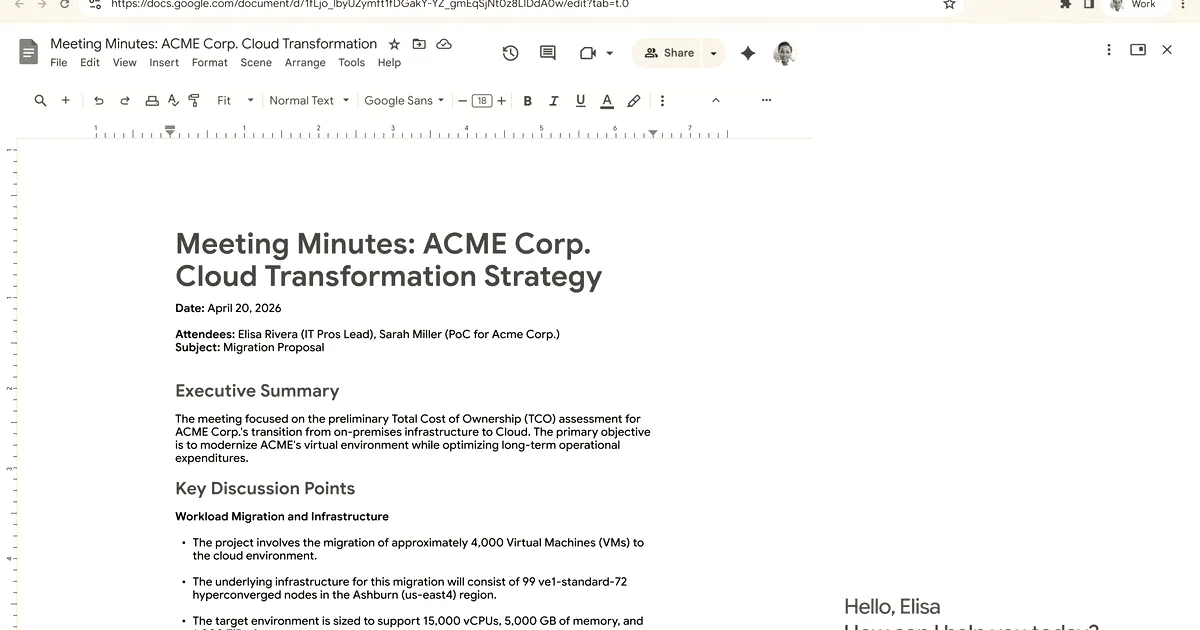
Google announced at its Google Cloud Next event on Wednesday that it is bringing “auto browse” agentic capabilities—meaning artificial intelligence that can perform tasks autonomously—to Chrome users in the enterprise. The new feature will initially be available to Workspace users in the U.S. and can be enabled via an IT policy. Powered by Google’s Gemini AI model, the tool allows the browser to understand the live context of open tabs to handle web-based tasks like booking travel, inputting data, and scheduling meetings. However, Google notes that these workflows will still require a “human in the loop” to review and confirm any AI input before final actions are taken.
According to Google, the tool could be used for tasks like inputting information in CRM systems, comparing vendor pricing across tabs, pulling key data from competitor pages, and summarizing candidate portfolios. Workspace users will be able to save their most common workflows for later use as “Skills,” which can be accessed by typing a forward slash or clicking a plus sign. To address corporate privacy concerns, Google stated that an organization’s prompts will not be used to train Google’s AI models. This data policy stands in contrast to recent controversies surrounding other tech firms, such as allegations that Meta is using its own employees’ keystrokes to train its AI.
Alongside these productivity features, Google is expanding the capabilities of Chrome Enterprise Premium to help IT teams identify security risks. The browser is adding what Google calls “Shadow IT risk detection”—referring to the identification of unauthorized software or hardware usage within an organization—to detect unsanctioned generative AI tools and anomalous agent activity. To secure this agentic environment, Google is expanding its partnership with Okta to reduce session hijacking and integrating with Microsoft Information Protection to help organizations enforce consistent security policies. Additionally, IT teams will receive Gemini-powered summaries of Chrome Enterprise release notes to surface critical changes, new policies, and recommendations for configuring settings or reviewing managed browsers.
Why it matters
Google is positioning itself as the gatekeeper of enterprise AI, balancing the productivity gains of agentic workflows with the security controls needed to prevent “Shadow IT” and unsanctioned AI usage. By embedding both automation and oversight directly into the browser, the company aims to control how generative AI is adopted and secured in the workplace.