AI & Models
Google shifts search to agentic, conversational experience
Google unveiled an AI-powered search overhaul at I/O, introducing conversational queries and information agents that will likely further decimate referrals to external publishers.
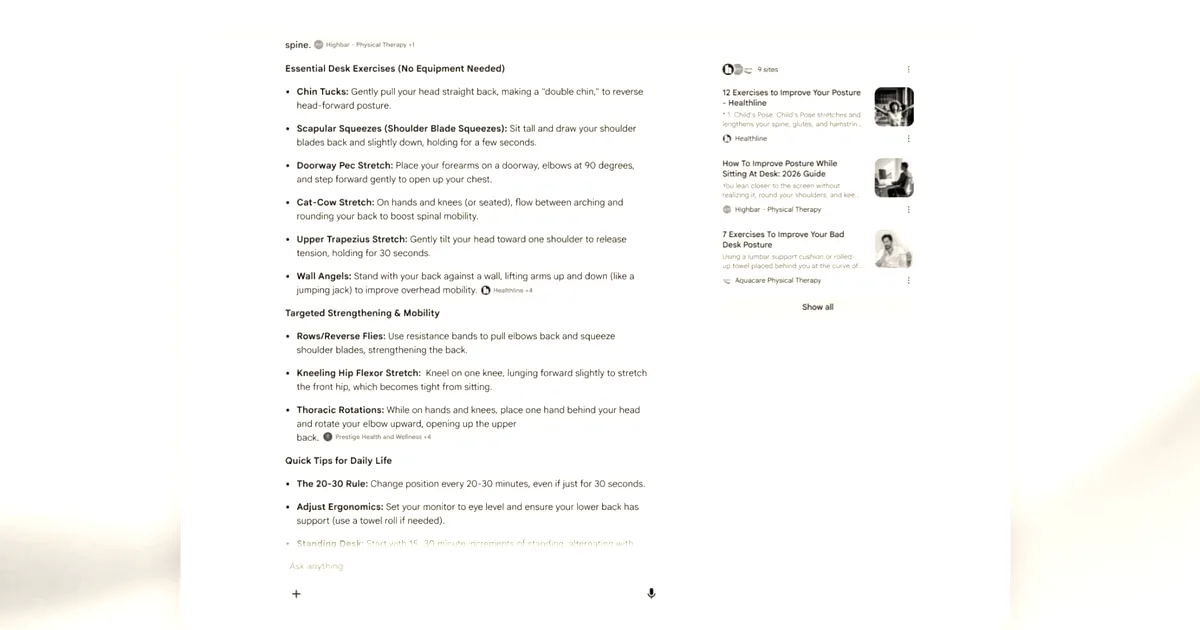
At Google I/O, the company’s annual developer conference, Google announced a major overhaul of its search interface on Tuesday. The update moves away from the traditional list of links toward an AI-powered, conversational experience. The new search box expands to accommodate longer, more conversational queries, and its AI Overviews feature allows users to ask follow-up questions. This shift marks the most significant change to the entry point of the web since the search box debuted more than 25 years ago.
The new system is built in partnership with Google DeepMind using Gemini, Google’s AI model family, and Google Antigravity, the company’s agentic development platform. It introduces “generative UI” (user interface) elements that build custom widgets and visualizations on the fly, alongside “information agents” that can work in the background to track web changes. These agents represent an evolution of Google Alerts, which launched in 2003. “Search can build custom experiences just for your individual questions, from dynamic layouts, interactive visuals to persistent and stateful project spaces that you can return to again and again,” said Liz Reid, Google’s head of Search.
Google is rolling out the new search box this week, with the generative UI and information agents scheduled to launch this summer. The scale of Google’s existing AI features is massive: AI Overviews are used by more than 2.5 billion monthly users, while its conversational search mode tops 1 billion monthly users. For comparison, ChatGPT has 900 million weekly active users. Google CEO Sundar Pichai noted that the company focuses on delivering frontier models that are highly capable, efficient, fast, and at a lower price to bring them to as many people as possible.
However, by prioritizing AI-generated answers and interactive widgets over traditional web results, the update changes how users interact with the web. These changes will likely further decimate Google referrals to publishers. This shift means that searching the web will increasingly be performed by AI agents rather than humans, leaving traditional links as an afterthought.
Why it matters
Google is implementing the most significant change to its search interface in over 25 years by shifting to an AI-powered, agentic experience, a move that is expected to reduce traffic to external publishers.