AI & Models
Google’s new AI agents are locked behind an only $100 monthly plan
Google has unveiled a new ecosystem of AI agents, including Gemini Spark, but is currently restricting access to its only $100-per-month Ultra plan subscribers.
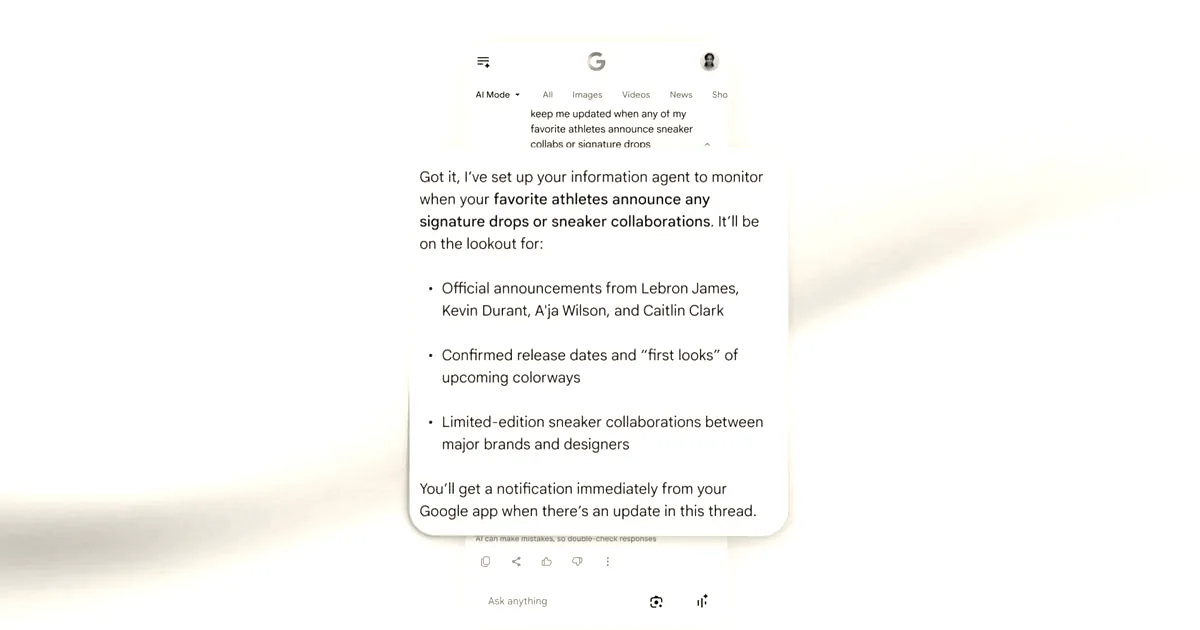
At its developer conference on Tuesday, Google pitched a new consumer ecosystem of AI agents designed to operate in the background 24/7. Rather than standard chatbots, these agents are built to handle ongoing, automated tasks across Google’s product suite. The initial rollout introduces four distinct features to manage different aspects of a user’s digital life:
- Information Agents: AI-infused tools designed to operate in the background 24/7 to keep users updated on specific topics.
- Gemini Spark: A personal AI agent that integrates with Google products to manage digital tasks.
- Android Halo: A feature designed for tracking notifications sent by Gemini Spark.
- Daily Brief: An AI digest feature that compiles updates from Gmail, calendar, and tasks.
These tools represent a shift toward background automation, where software works continuously without direct user prompts. However, the rollout strategy differs significantly from Google’s historical product launches.
These agentic features are not yet available to the general public. Google is targeting its heavier users for now: the “AI-pilled” (heavy AI users) subscribers of its new Google Ultra plan, which costs only $100-per-month. These features are currently limited to the U.S. market. According to Google, the company intends to bring its agentic features, including Gemini Spark, to free users when the time is right. For now, however, the technology remains restricted to a high-paying tier of subscribers who are expected to push the limits of what these background agents can do.
This high-cost strategy highlights a growing divide between Google’s corporate direction and the average consumer’s daily reality. For many users, the rapid expansion of artificial intelligence is associated with negative outcomes, such as “AI slop” cluttering digital spaces, “unwanted data centers being built in their backyards,” or even the legal threat of a “home being torn down via eminent domain” to support the physical infrastructure of the technology.
This disconnect is creating opportunities for nimbler competitors. Messaging-first AI startups, including Poke, Poppy, RPLY, and Wingman, are gaining traction by offering simpler, text-based ways to interact with AI agents. This contrasts with Google’s historical approach. In 2018, Google introduced a restaurant-and-salon booking service that was framed as a free, accessible tool to smooth over everyday hassles. By keeping its new agents behind a steep paywall, Google risks isolating the very consumers it needs to adopt them.
Why it matters
Google is betting on an agent-first future, but by gating these tools behind a high-cost subscription, it risks alienating the average consumer and ceding ground to nimbler, messaging-focused AI startups.