Startups & Funding
Firestorm Labs raises $82 million for mobile drone factories
Firestorm Labs raised $82 million in Series B funding to scale its containerized drone manufacturing platform, which aims for full operational deployment within two years.
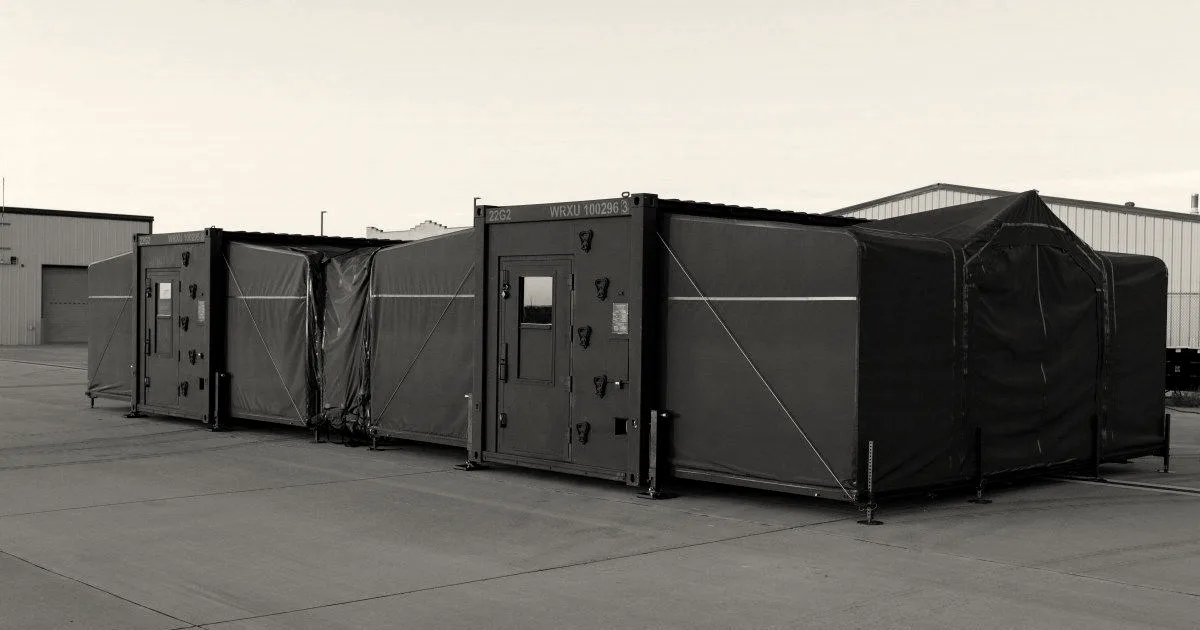
On Wednesday, defense startup Firestorm Labs announced it has raised $82 million in a Series B funding round—a stage of venture capital financing—bringing its total funding to $153 million. The round was led by Washington Harbour Partners. Other investors participating in the round include:
- NEA
- Ondas
- In-Q-Tel
- Lockheed Martin
- Booz Allen Ventures
- Geodesic
- Motley Fool Ventures
The company, co-founded by CEO Dan Magy, Chad McCoy, and CTO Ian Muceus, plans to use the capital to scale its containerized drone manufacturing platform.
The startup’s manufacturing platform, called xCell, uses 3D printing—an additive manufacturing technology—to produce complete drone systems in under 24 hours. Through a technology partnership, Firestorm holds a five-year exclusive with HP to use its 3D printing technology in mobile deployment units. The drones themselves are highly adaptable. Magy told TechCrunch that the drones can be configured for surveillance or electronic warfare depending on mission requirements. When asked about the capabilities of the xCell platforms, Magy confirmed they are capable of lethal operations.
The startup’s approach addresses a critical vulnerability in modern military operations: traditional supply lines, including ships and planes carrying parts to the front lines, are vulnerable to attack. To counter this, the US Department of Defense has prioritized “contested logistics,” a military term for keeping weapons and supplies moving under fire. Firestorm is currently fulfilling an Air Force contract with a $100 million ceiling, of which $27 million has been obligated so far. The technology is already in active use, with two xCell units deployed domestically: one with the Air Force Research Laboratory in Rome, New York, and another with the Air Force Special Operations Command in Florida.
While the company says the platform is already operational in the Indo-Pacific, it is heavily focused on expanding its presence in the region, where the logistics challenges of modern conflict are hardest to solve. Magy noted that the startup aims for xCell to reach full operational deployment in the Indo-Pacific, “ideally within the next two years.”
Why it matters
The Pentagon has identified contested logistics—maintaining supply lines under fire—as a critical technology priority, and Firestorm Labs is attempting to solve this by decentralizing production directly to the front lines.