Markets & Business
Commonwealth Fusion Systems installs first magnet for Sparc reactor
Commonwealth Fusion Systems installed the first magnet for its Sparc reactor and partnered with Nvidia and Siemens to develop a digital twin to accelerate fusion development.
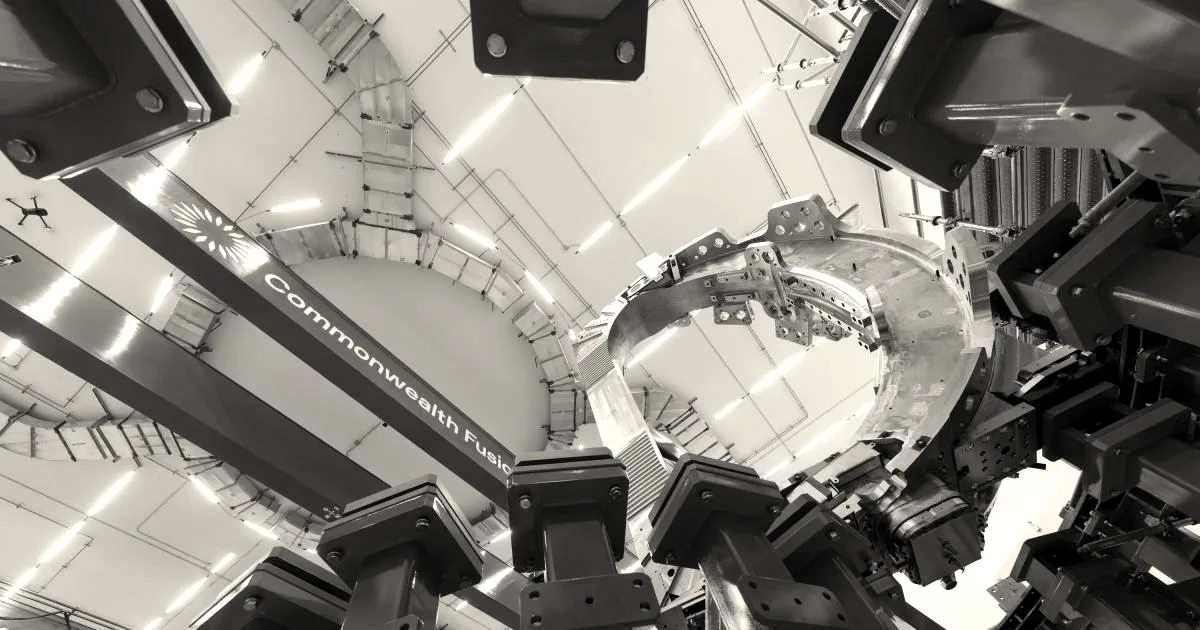
On Tuesday, Commonwealth Fusion Systems (CFS) announced at CES 2026 that it has installed the first magnet in its Sparc fusion reactor. The company hopes to turn on the Sparc reactor next year. Alongside this physical milestone, CFS announced a partnership with Nvidia and Siemens to develop a digital twin—a virtual simulation of a physical system—of the reactor. The collaboration is intended to run simulations alongside the physical machine to accelerate the development of fusion power, which could unlock nearly limitless clean energy.
The newly installed magnet is the first of 18 total magnets that CFS expects to install by the end of the summer. According to Bob Mumgaard, CFS’ co-founder and CEO, “It’s the type of magnet that you could use to, like, lift an aircraft carrier.” When completed, the 18 magnets will form a doughnut-like shape to confine and compress superheated plasma.
The technical specifications of the reactor’s assembly include:
- The cryostat: A 24-foot wide, 75-ton stainless steel circle used to maintain cryogenic temperatures, which was set in place last March.
- The magnets: Each magnet weighs about 24 tons and can generate a 20 tesla magnetic field—a unit of magnetic flux density that is about 13 times stronger than a typical MRI machine.
- Operating conditions: To achieve this strength, the magnets will be cooled to -253˚ C to safely conduct over 30,000 amps of current, while the plasma inside will burn at more than 100 million degrees C.
To resolve potential issues before Sparc is turned on, CFS is working with Siemens and Nvidia. Siemens is providing design and manufacturing software to collect data, which will then be fed into Nvidia’s Omniverse libraries. While CFS has previously run isolated simulations to predict the performance of individual parts, the digital twin will run alongside the physical reactor. This allows the engineering team to constantly compare the virtual model with the physical machine, enabling them to run experiments and adjust parameters in the simulation before applying them to the actual hardware. Mumgaard noted that this parallel testing will allow the company to learn from the machine even faster.
The development of the Sparc reactor represents a capital-intensive effort. CFS has raised nearly $3 billion to date to fund its operations.
- Series B2 round: In August, CFS raised $863 million in a funding round that included investments from Nvidia, Google, and other investors.
- The Arc power plant: The company’s planned commercial-scale power plant, Arc, will likely cost another several billion dollars to complete, according to CFS estimates.
The company is targeting the early 2030s to deliver the first fusion-powered electrons to the grid.
Why it matters
CFS is leveraging a digital twin to run simulations alongside its physical Sparc reactor, a strategy designed to accelerate the timeline for delivering fusion energy to the grid.