Apps & Consumer
Bluesky adds group chats as it pivots toward community focus
Bluesky has launched group chats for up to 50 people, marking a strategic shift toward community-focused features as it attempts to differentiate from larger social platforms.
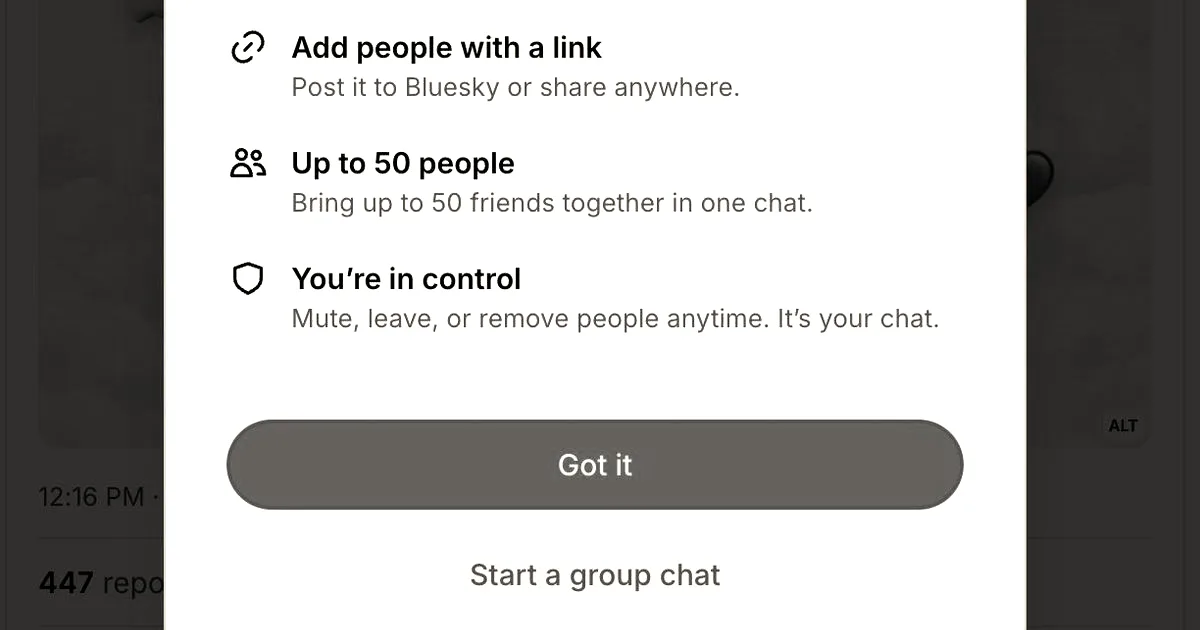
On Thursday, social network Bluesky launched support for group chats, allowing users to interact in smaller, private settings. The new feature currently supports up to 50 people per group chat. This limit is significantly smaller than the 1,000 members supported by competitor social network X in its group chats. However, Bluesky has indicated that it may increase its group chat limit in the future. The startup previously added support for messaging in 2024, later integrating Germ, a third-party messaging service.
The launch represents a broader strategic pivot for Bluesky, which is shifting its focus to community features to differentiate itself from larger competitors like X and Meta’s Threads. The platform currently has 44.8 million registered users, a figure that remains far behind X’s 600 million monthly active users. As its own growth has slowed, Bluesky is betting that users are looking for an exit from Big Tech platforms and are seeking alternatives to the traditional public-square model. The timing of the launch is notable given that X announced in April that it was shutting down its own Communities feature.
Alex Benzer, the head of product at Bluesky, described the transition as a move toward more focused spaces. “Today, Bluesky is one big space. Communities will be smaller spaces inside that where you can go deeper and hang out with people who care about the same stuff,” Benzer wrote. The company plans to build these community features on AT Proto, the underlying open-source protocol for Bluesky. These communities will allow users to set privacy options similar to those available on Facebook Groups or Reddit. However, sharing media in group chats is not yet supported, a capability that Bluesky asserts will require additional safety and moderation systems before it can be deployed.
By introducing these tools, Bluesky is positioning itself as an alternative for users who want more control over their online interactions. The company is specifically pitching its platform to those looking to leave established Big Tech networks, which Bluesky characterizes as relying on “rogue AI moderation systems.”
Why it matters
Bluesky is pivoting to community-centric tools to carve out a niche against dominant incumbents like X and Meta, betting that users want more control over their social experience.