Startups & Funding
Avalanche raises $29M to shrink nuclear fusion reactors
Avalanche raised $29 million to advance its desktop-sized nuclear fusion reactor, applying iterative 'new space' development methods to reach the Q>1 breakeven point.
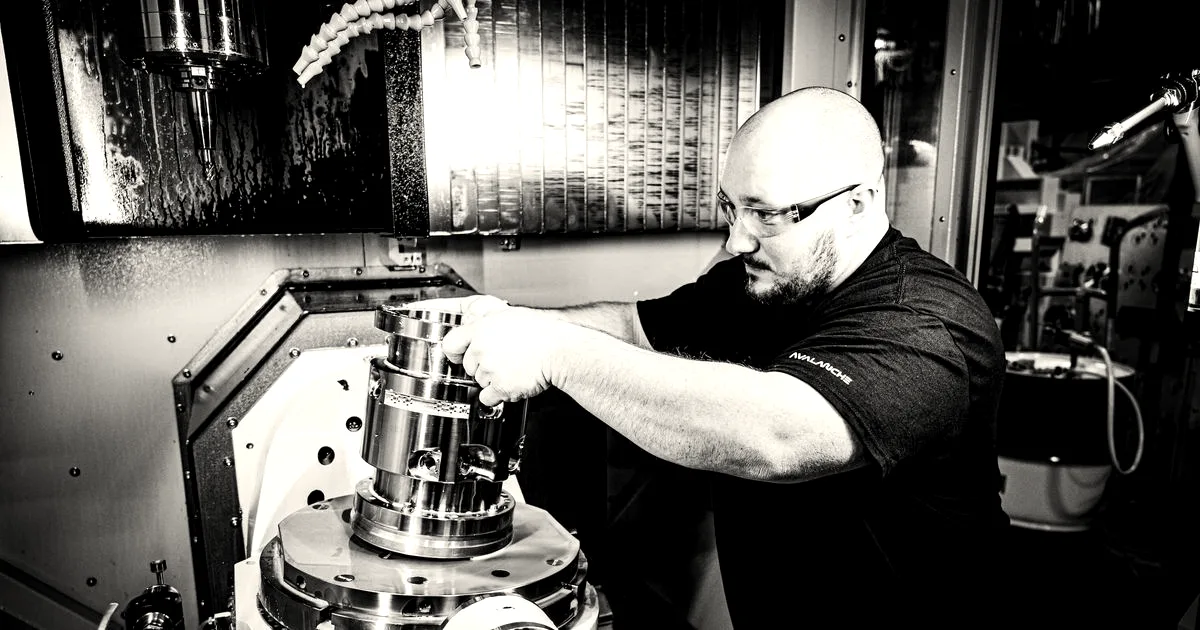
Avalanche, a fusion power startup, has raised $29 million in an investment round led by R.A. Capital Management. The funding brings the company’s total capital raised to date to $80 million. The startup is developing what is essentially a desktop version of nuclear fusion, a stark contrast to the massive reactors or large laser arrays typically associated with the industry.
The investment round was led by R.A. Capital Management, with participation from a group of venture firms and investment groups:
- 8090 Industries
- Congruent Ventures
- Founders Fund
- Lowercarbon Capital
- Overlay Capital
- Toyota Ventures
The company’s co-founders, Robin Langtry (who serves as CEO) and Brian Riordan, previously worked at the space technology company Blue Origin. This background heavily influenced their development strategy. Langtry noted that using a SpaceX-style “new space” approach allows them to iterate and learn quickly to solve these challenges. Going smaller allows the company to speed up, testing changes to its devices sometimes twice a week.
Currently, Avalanche’s reactor is 9 centimeters in diameter. The company uses electric current at high voltages to draw plasma particles into an orbit around an electrode. As the orbit tightens and the plasmas speed up, the particles collide and fuse. This differs from competitors that use large magnets to contain plasma in a tokamak—a doughnut-shaped device—or those that compress fuel pellets using lasers. Langtry explained that the startup is leveraging its small size to learn and iterate quickly.
A new version of the reactor is expected to be about 25 centimeters in diameter and is expected to produce about 1 megawatt. Langtry noted that this larger size is expected to significantly increase confinement time, giving the plasmas a chance to reach Q>1—the fusion breakeven point where power output exceeds power input.
These experiments will take place at the company’s FusionWERX facility. By 2027, the site will be licensed to handle tritium, an isotope of hydrogen used as fuel in fusion. While Langtry did not commit to a specific date for generating net energy, he expects Avalanche to progress on a similar timeline to competitors like Commonwealth Fusion Systems and Helion. “I think there’s going to be a lot of really exciting things happening in fusion in 2027 to 2029,” Langtry said.
Why it matters
Avalanche is applying a “new space” iterative development approach to nuclear fusion, aiming to solve complex physics challenges with smaller, faster-tested reactors.