Apps & Consumer
Eight apps trade phone access for real-world movement
A wave of apps now locks distracting social and streaming apps behind step counts, workouts, or even a photo of grass, giving users a structural way to cut doomscrolling.
Doomscrolling — hours of mindless feed-scrolling that hurts posture, eyes, and mood — has a growing category of apps built to interrupt it before it starts. Rather than relying on willpower, these tools block or delay access to distracting apps until a physical-activity or outdoor condition is met.
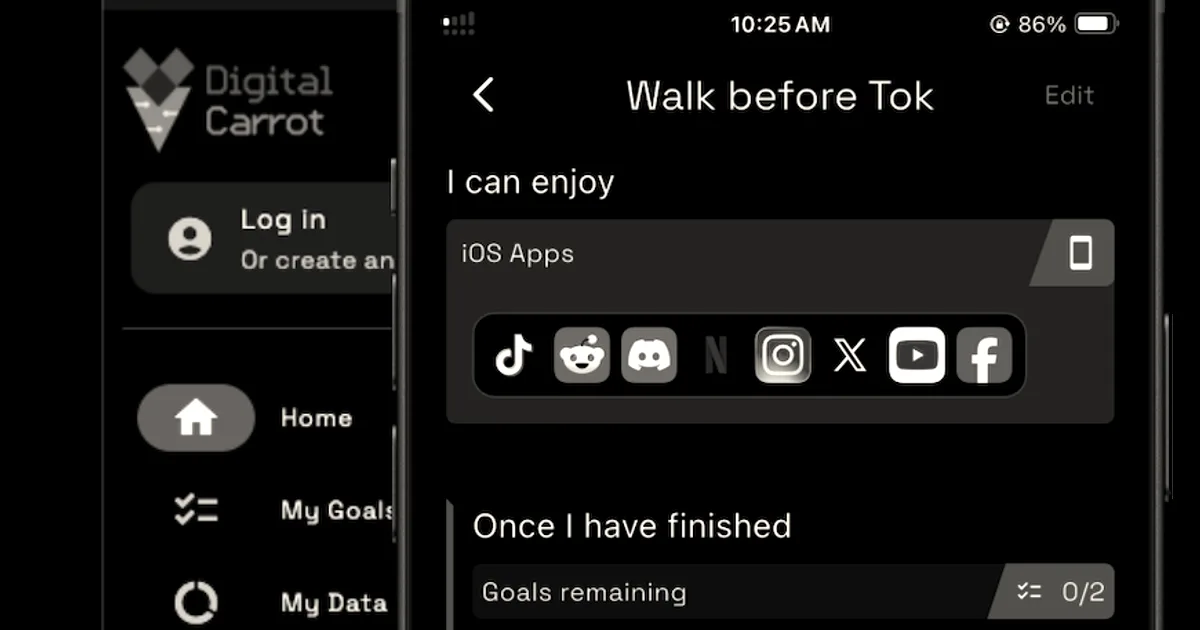
Digital Carrot blocks distracting apps, websites, and games until a user hits daily fitness, productivity, or screen-time goals, connecting to wearables like the Apple Watch for personalized targets such as walking 6,000 steps a day. It also supports GPS- and time-based challenges — for example, requiring a 60-minute gym workout at a specific location — and runs on iPhone, Android, macOS, Windows, and Linux.
MeBeMe instead sends notifications prompting missions such as doing burpees, connecting with people, or warming up for three minutes; its “Body” category adds challenges for athletes, dancers, cyclists, and runners. It’s currently free on iOS.
StepBloc locks selected apps until a user walks a set number of steps, or completes timed push-ups, planks, or squats, before unlocking apps like Instagram, TikTok, YouTube, or games; it’s free on iOS with a subscription required for unlimited access. Steppin, created by the founder of Kayak, instead trades movement for scrolling time directly, letting users earn, for example, one minute of scrolling for every 100 steps taken, with flexible, user-set goals for social media, streaming, or games, on iOS.
TouchGrass takes the most literal approach: it requires stepping outside and photographing grass — verified by computer vision that rejects trees or other plants — to unlock locked apps, free for two apps or $5.99 a month ($49.99 a year) for more, on iOS. WalkLock integrates with Apple Health to gate selected apps until a daily step goal is met, tracked automatically via iPhone or Apple Watch, with a lockscreen widget showing progress; Walkly, its Android counterpart, similarly locks social, gaming, and other apps until a set step count is reached, continuously monitoring activity and auto-unlocking once the goal is hit. WeWard, which pays users in redeemable “Wards” for walking, recently added a “Walking Mode” that restricts app access until customizable step counts are met, with both the goals and the locked-app list customizable, on iOS and Android.
Why it matters
By tying screen access to physical movement rather than relying on willpower or blunt screen-time limits, these apps offer a structural alternative for users trying to cut back on compulsive scrolling.