Chips & Hardware
Transaera lands Amazon to scale its dehumidification tech
Amazon is testing Transaera’s new dehumidification units, which the company says are up to twice as efficient as existing systems, to help reach its 2040 net-zero goal.
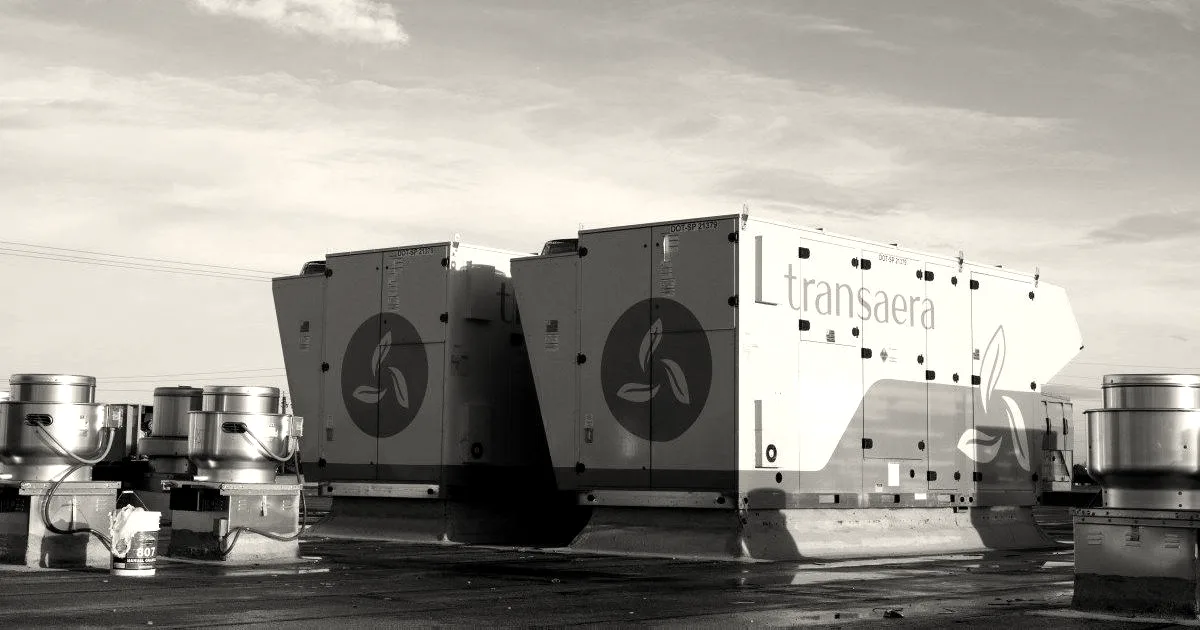
Amazon has begun testing a new ventilation unit developed by Transaera in Houston. The device, known as a Dedicated Outdoor Air System (DOAS), is designed to keep indoor air fresh while reducing the workload on standard air conditioning systems. According to Amazon, adopting Transaera’s DOAS units will help the company reduce its energy use and support its path toward reaching net-zero carbon emissions by 2040. Sorin Grama, co-founder and CEO of Transaera, stated that Amazon is considering the technology as a design solution. Once they find a solution that works, Grama noted, they put that into their design standard and replicate it across their building stock.
The DOAS unit works by separating the dehumidification process from cooling. It can remove 100 pounds of water from the air every hour, meaning the primary air conditioning system does not have to run as hard. To achieve this, the system utilizes a desiccant material that coats a slowly spinning wheel inside the unit. The desiccant is based on a class of materials that won its discoverers a Nobel Prize in 2025. As air passes into the unit, the desiccant draws moisture out of the air, which then passes through a heat exchanger before entering the building. Stale air is drawn out along with heat, which flows through the moisture-saturated wheel to release the moisture outside. Transaera says this process makes its unit up to twice as efficient at removing moisture compared to existing dehumidification systems.
In hot and humid climates like the U.S. South, commercial buildings often run air conditioning excessively to control humidity, which can otherwise create fertile ground for hazardous molds. Grama noted that operators frequently over-cool buildings to dry the air, sometimes requiring them to reheat the air afterward. To address this, Transaera designed its system to integrate directly with existing infrastructure. “It’s a like-for-like replacement of a legacy unit,” Grama said, adding that this ease of installation is driving demand. Grama said the startup has purchasing targets worth nine figures from customers, and its agreement with Amazon reserves manufacturing capacity over the next three years.
Why it matters
Amazon’s adoption of Transaera’s DOAS units signals a potential shift in commercial building HVAC design standards to improve energy efficiency and reduce humidity-related energy waste.