Markets & Business
Airwallex enters in-person payments to challenge Stripe and Square
Airwallex is launching a point-of-sale product to enable global in-person payments, aiming to compete with Stripe and Square by leveraging its own international payment infrastructure.
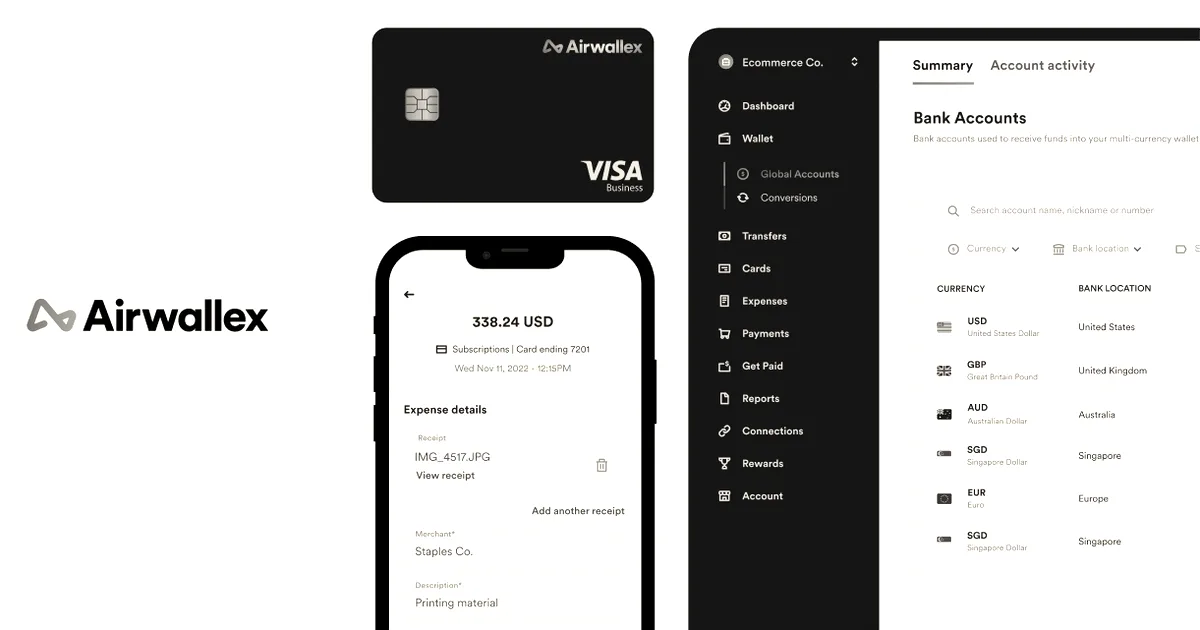
Airwallex, a fintech company founded in 2015 by Jack Zhang, is moving into in-person payments with the launch of a point-of-sale (POS) product. The move marks a direct expansion into physical payments, a market where it will compete with rivals like Stripe and Square. To build its platform, Airwallex spent years assembling its own underlying payment rails—the infrastructure for moving money across borders. In 2019, Stripe offered to acquire Airwallex for $1.2 billion when Airwallex had $2 million in revenue, though Zhang ultimately declined the acquisition to continue building the company. Today, the company is valued at $8 billion.
The company’s scale is reflected in its current operational and financial metrics:
- Annualized revenue: About $1.3 billion, which is growing by roughly 85% annually.
- Transaction volume: $100 billion in annual volume processed.
- Customer base: More than 46,000 U.S. businesses served.
- Global reach: Direct connections to local payment networks in over 120 countries, with the ability to settle transactions in more than 90 currencies.
- Regulatory footprint: 90 regulatory licenses across roughly 50 markets.
Airwallex is betting that its regulatory and banking footprint will differentiate its POS product from rivals. Zhang noted that when a business expands internationally, it typically must onboard a new local acquirer—the financial institution that processes credit and debit card payments—while navigating fragmented compliance and managing multiple vendor relationships. Airwallex’s licenses allow it to bypass these steps. For example, obtaining a license in Japan took seven years, but it allows the company to hold funds locally. “Stripe and Square can process payments in Japan, but when you actually process the payment, you need to immediately pay out to the merchant’s bank account. You can’t hold the funds,” Zhang said.
This infrastructure allows multinational businesses to operate physical stores in different countries under a single payment system. Airwallex faces competition in this space from Adyen, which makes a similar global infrastructure argument, as well as legacy providers such as Fiserv, Global Payments, and Worldpay. The company is betting that multinational merchants will prefer a unified platform over managing separate local vendors in every market they enter.
Why it matters
Airwallex’s new POS product allows businesses to accept in-person payments across borders via a single platform, challenging incumbents by using its global banking infrastructure to avoid the need for local acquirers in every market.