AI & Models
Adobe launches Firefly AI Assistant to unify creative workflows
Adobe is launching its Firefly AI Assistant to automate workflows across its creative apps, with a public beta expected in the coming weeks.
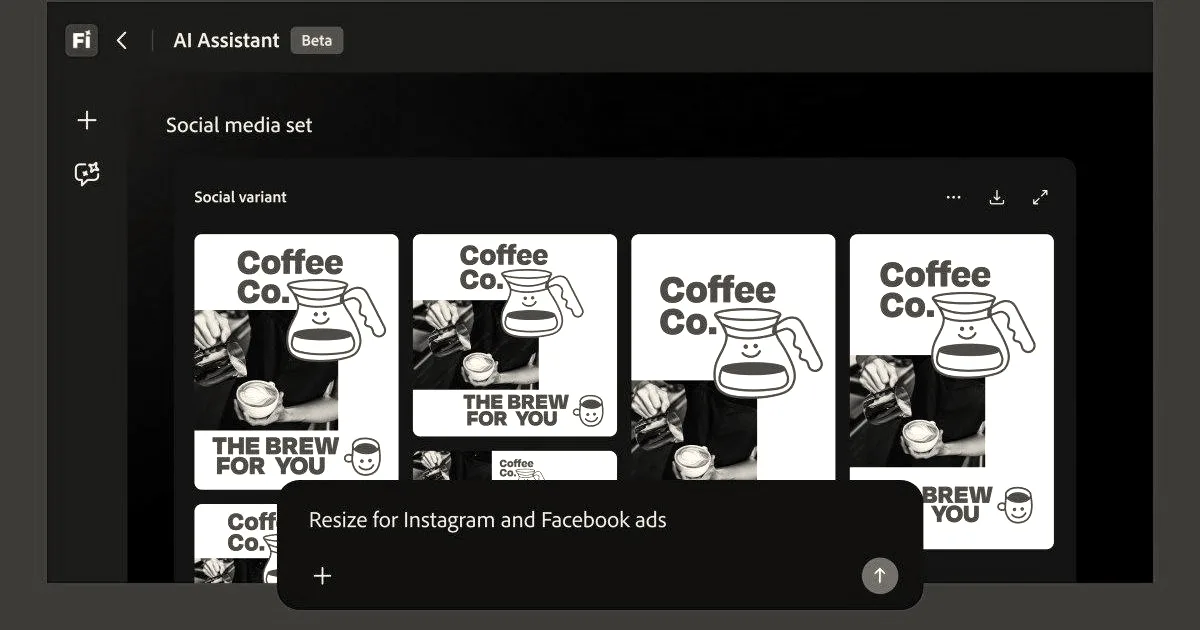
Adobe is launching its Firefly AI Assistant, a tool designed to perform tasks and orchestrate workflows across its creative applications. The product was previewed last October under the “Project Moonlight” moniker, demonstrating the ability to perform tasks by tapping into different Adobe applications. The newly branded Firefly AI Assistant will be available in public beta in the coming weeks.
The assistant allows users to describe what they want to create, handling tasks across applications such as Photoshop, Illustrator, Premiere, Lightroom, Express, and Firefly. Users can control the outputs using text prompts, buttons, and sliders. The assistant can suggest actions, orchestrate between different applications, and execute workflows, while leaving room for users to interject at any time. It also introduces multi-step workflows called “skills.” For example, a “social media assets” skill can help users adapt images for different platforms by cropping or expanding them, optimizing file sizes, and storing the outputs. Additionally, the assistant is designed to learn more about user creative preferences over time to suggest actions accordingly.
The company said on Wednesday that it is exploring having these assistants work better with third-party large language models. This exploration comes as competitors like Canva and Figma also work on agentic experiences—which are AI workflows where the system can orchestrate actions and execute tasks. To expand its library of third-party AI models, Adobe is also adding the Kling 3.0 and Kling 3.0 Omni models to Firefly.
Alexandru Costin, vice president of AI and innovation, creativity and productivity business at Adobe, highlighted the strategic focus of the launch. “We have the opportunity with the Firefly AI assistant and with agentic experiences to remove some of the friction in learning this large catalog of tools we have and bring all of that value to our customers at their fingertips. And that’s the opportunity we have,” Costin said.
Why it matters
Adobe’s move to integrate agentic AI across its software applications signals a shift toward unifying its software catalog, aiming to reduce user friction by automating multi-step creative workflows.