AI & Models
Pew Research: 12% of US teens use AI for emotional support
About 12% of US teens use AI for emotional support, highlighting a significant gap between teen usage and parental awareness, according to a new Pew Research Center report.
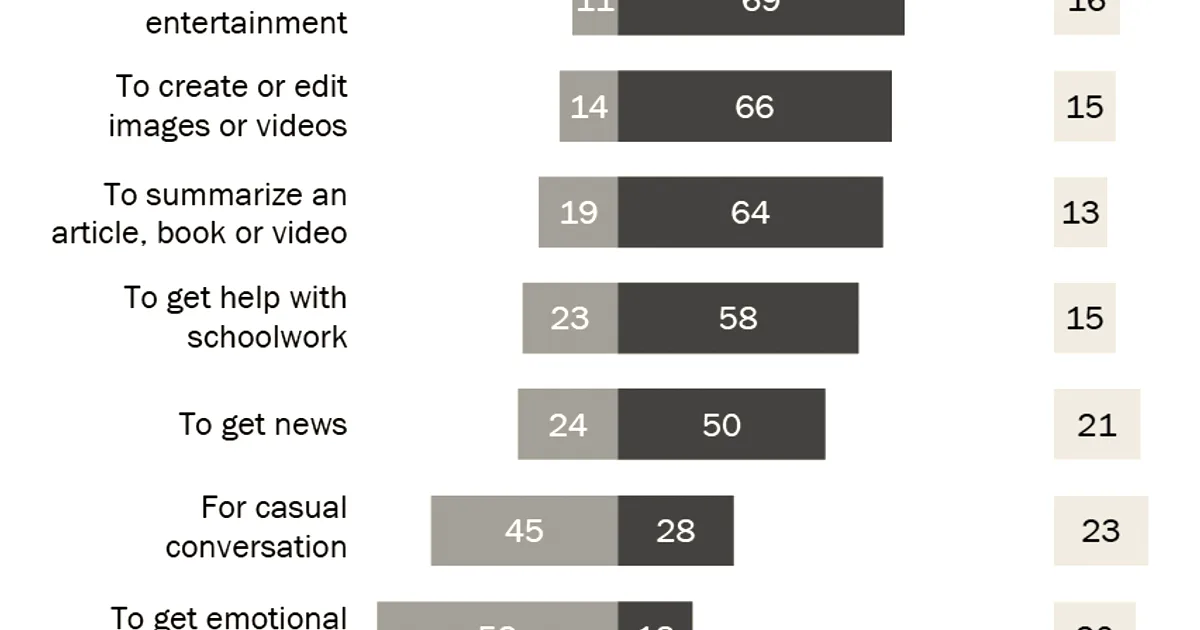
A new report published Tuesday by the Pew Research Center, a non-partisan research organization, reveals that artificial intelligence has become deeply integrated into the daily lives of American teenagers. While the most common uses of AI among this demographic are practical—with 57% of US teens using AI to search for information and 54% using it for schoolwork—a notable portion of youth are turning to these systems for social and emotional interaction. Sixteen percent of US teens report using AI for casual conversation, and about 12% use AI chatbots for emotional support or advice.
The study highlights a clear generational disconnect regarding how deeply technology has penetrated daily routines. While 64% of teens report using chatbots, only about 51% of parents believe their children are engaging with the technology. This gap in awareness is accompanied by a sharp divergence in parental approval. While 79% of parents are okay with their teens using AI to search for information and 58% approve of its use for schoolwork, only 28% approve of its use for casual conversation. Furthermore, only 18% of parents approve of their teens using AI for emotional support or advice, with 58% of parents explicitly stating they are not okay with their child using AI for such purposes. This generational divide occurs alongside mixed feelings among youth regarding the long-term societal impact of artificial intelligence. When asked how AI will affect society over the next 20 years, 31% of US teens think the impact will be positive, while 26% think it will be negative.
Mental health professionals warn that general-purpose AI tools, such as ChatGPT, Claude, and Grok, are not designed for therapeutic purposes. In the most extreme cases, experts caution that chatbots can have life-threatening psychological effects. Dr. Nick Haber, a Stanford University professor researching the therapeutic potential of large language models (LLMs), emphasized the risks of relying on these systems. “There are a lot of instances where people can engage with these tools and then can become not grounded to the outside world of facts, and not grounded in connection to the interpersonal, which can lead to pretty isolating — if not worse — effects,” Haber said.
These safety concerns have already forced operational shifts within the tech industry. Chatbot maker Character.AI disabled the chatbot experience for users under the age of 18. This decision followed public outcry and lawsuits filed over two teenagers’ suicides, which occurred after prolonged interactions with the platform’s chatbots.
Why it matters
The report reveals a significant disconnect between how US teens are using AI and what parents perceive, while experts warn that general-purpose chatbots carry risks of isolation and psychological harm.